Test report · tested November 20, 2026
Processors & AcceleratorsDevice under test
OpenAI Claims 13% Area Cut in Jalapeño Chip, 14% PPA on AMD GPU IP
OpenAI reports 13% and 10% area cuts in its Jalapeño inference chip and up to 14% PPA on AMD flagship GPU IP, achieved by models rewriting SystemVerilog RTL.
- Read
- 4 min
- Words
- 774
- Segment
- Processors & Accelerators
- Operator
- Marcus Bennett
Spec summary
- OpenAI claims ~13% standard-cell area reduction in Jalapeño's vector unit and ~10% in its matrix unit.
- Up to 14% PPA improvement reported on AMD flagship GPU IP against heavily optimized baselines.
- Models rewrote SystemVerilog RTL; gains reportedly equal one year of progress in under five months.
- Jalapeño, OpenAI's first custom inference chip, went from design to tapeout in nine months.
- No independent confirmation exists; no AMD product, price, volume or model breakdown is named.
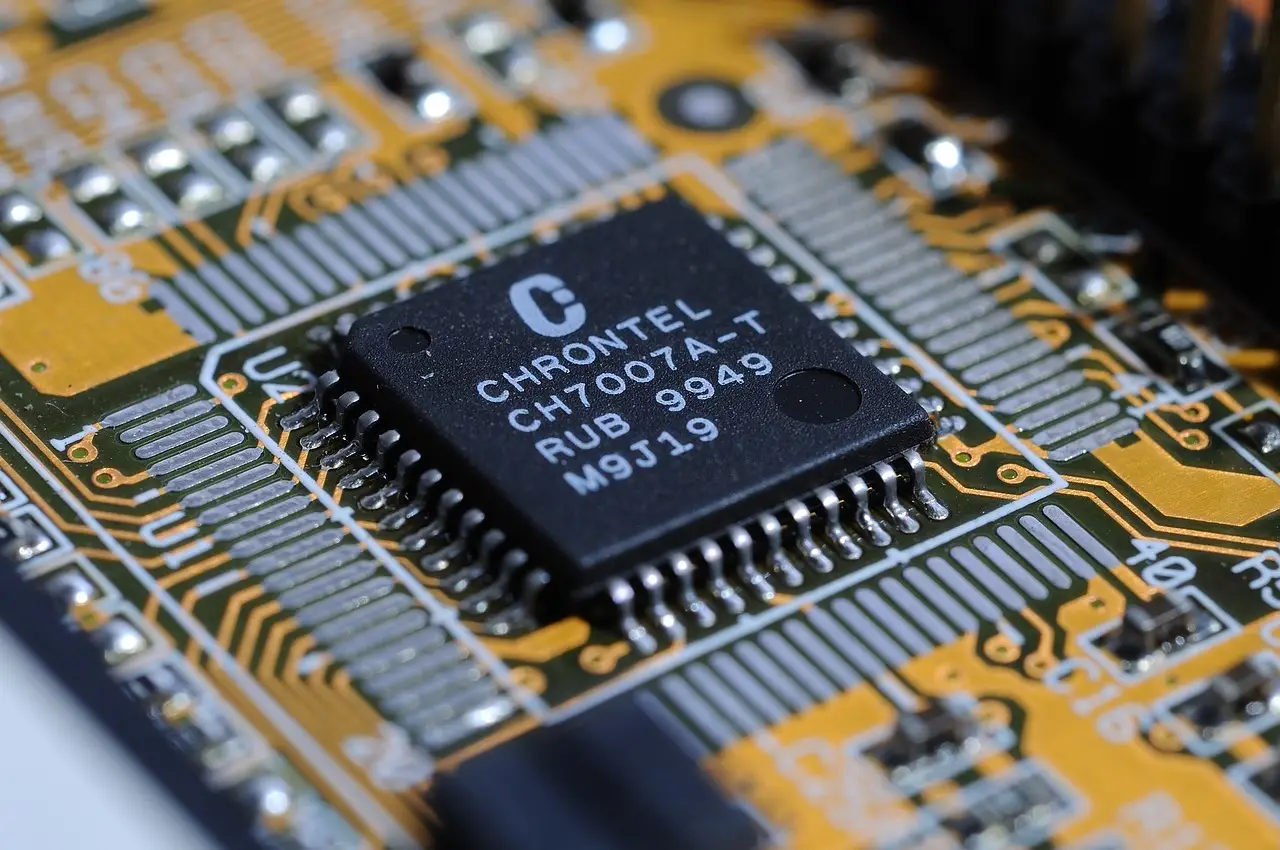
OpenAI says its models cut standard-cell area by about 13% in the vector unit of Jalapeño, its first custom inference chip, and by about 10% in the matrix unit. The company also reported up to 14% improvement in power, performance and area (PPA) on AMD's flagship GPU IP, measured against heavily optimized baselines. The claims come from a briefing reported by The Information and OpenAI's own technical write-up.
The numbers are specific. The evidence base is narrow. Every figure traces back to OpenAI, and no named executive from either company has spoken on record. That shapes how much weight the results carry today.
What does this change for chip design?
The mechanism matters more than the percentages. OpenAI's models produced the AMD gains by rewriting SystemVerilog RTL, the text-based code that describes a chip's circuits. RTL looks much like software code. A model can propose a rewrite, a toolchain can check it, and engineers can read the diff. This resembles software review more than manual layout work.
That is the structural difference from earlier automation. Placement tools shuffle fixed blocks. An RTL rewrite can replace an entire arithmetic scheme with a cheaper one that behaves identically. Chip design has automated in stages for decades, and each wave moved human effort up one layer, but language models working in RTL can change logic structure, not just geometry.
OpenAI did not claim a model designed a chip alone. The work is model-assisted design: engineers set goals, run flows and hold sign-off accountability.
The claim list, row by row
- Vector unit area: about 13% reduction (Jalapeño, OpenAI via The Information)
- Matrix unit area: about 10% reduction (Jalapeño, OpenAI)
- Silicon validation: improvements held up during bring-up (OpenAI)
- PPA: up to 14% against heavily optimized baselines (AMD flagship GPU IP, OpenAI)
- Method: models rewrote SystemVerilog RTL (AMD GPU IP, OpenAI)
- Schedule: roughly one year of progress in under five months (AMD work, OpenAI)
- Tapeout: Jalapeño went from initial design to tapeout in nine months, per OpenAI's earlier published information
The bring-up line deserves emphasis. Synthesis estimates often flatter reality. A claim that survives contact with real silicon carries more weight than a tool report.
Both qualifiers on the 14% figure carry weight too. "Up to" means best case, not average. "Heavily optimized baselines" means engineers had already squeezed these designs, so any gain is harder to find. Gains on mature flagship IP say more about model capability than gains on a first-generation chip ever could.
Why the schedule claim needs caution
The one-year-in-under-five-months figure is a statement about schedule compression. Nobody outside the project can check the counterfactual of how long the same gains would have taken otherwise. Two limits apply: faster proposal loops only help if verification keeps pace, and compressing one phase does not shrink packaging, validation or software bring-up.
The real economic prize is iteration. Chip teams spend most of their calendar on cycles of rewrite, synthesize, check and measure. If a model proposes many candidate rewrites at once, the loop tightens.
What is still unconfirmed
- Which AMD GPU product or model carries the gain
- Any price for a resulting product
- Chip production volume
- Which OpenAI models drove each improvement
- Independent measurement of any figure
Outlets including The Next Web and I10X News repeated the 14% number in headlines, but a summary is not a replication. Front Scoop reported the gains in similar terms, again drawing on OpenAI's account.
Market impact: AMD gains a signal, not revenue
For AMD, the news is mildly positive. A partner reported a 14% PPA gain on its flagship GPU IP. AMD has not confirmed the figure or said where it ships. Investors should read direction, not revenue.
For OpenAI, the effect runs through unit economics. A smaller, cheaper inference chip lowers serving cost per query. No cost-per-token figures exist for Jalapeño, so any dollar estimate would be invention.
For Nvidia, near-term impact is small. Jalapeño serves OpenAI's own workloads, not the merchant market. The long-term concern is different: if every large AI lab can compress chip schedules with its own models, more inference could move off merchant GPUs over time.
OpenAI also said some AI-generated circuit changes were included in a design sent for manufacturing. That shows real money committed to the checks. It does not say how many changes, how large, or how many candidates were discarded.
The takeaway: OpenAI made a specific, checkable claim, and part of it has survived real silicon. The AMD half still rests on the company's word.
via shattered.io (Source)
More from Marcus Bennett
Show full bio
News editor covering regulation, policy and their impact on hardware layer of artificial intelligence at Die Signal.
752 articles