Test report DSG-3275 · Rev B · tested October 10, 2026
Edge AI SiliconDevice under test
NVIDIA Jetson Orin Nano 2: 2x AI Throughput at 40% Lower Power
Wccftech reports the NVIDIA Jetson Orin Nano 2 delivers 2x robotics and edge AI performance while cutting power 40% at equivalent throughput. Benchmark, pricing, and availability details remain unspecified.
- Read
- 3 min
- Words
- 517
- Node
- 28nm
- Operator
- Priya Raman
Spec summary
- NVIDIA Jetson Orin Nano 2 delivers 2x performance for robotics and edge AI workloads, per Wccftech.
- Same module cuts power consumption 40 percent at equivalent throughput.
- Target market segments are robotics and edge AI.
- Benchmark suite, pricing, and availability details are absent from the original report.
- Module slots into the Jetson Orin line alongside the Orin NX and AGX tiers.
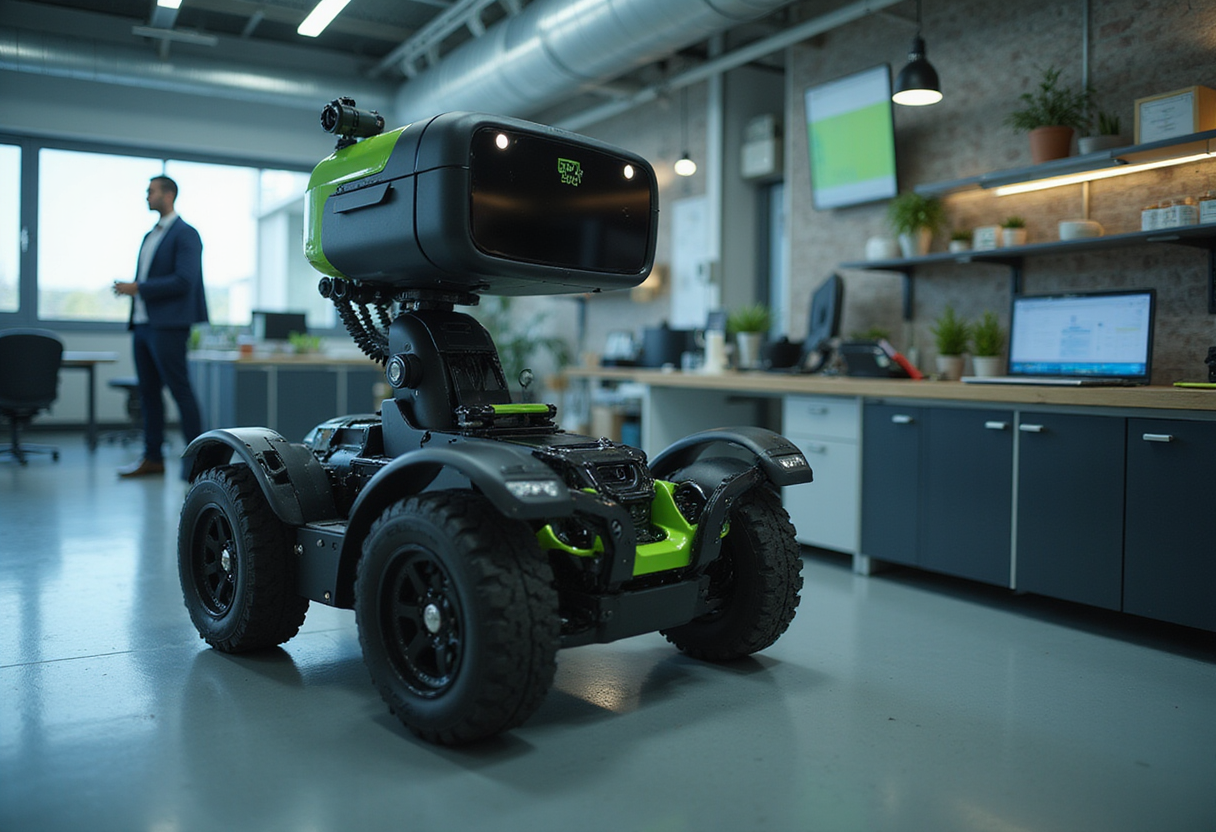
The NVIDIA Jetson Orin Nano 2 lifts robotics and edge AI performance 2x over the prior generation while cutting power consumption 40 percent at equivalent throughput, according to Wccftech. The two numbers describe the same generational efficiency gain from opposite directions: higher throughput at fixed power, or fixed throughput at a smaller power envelope.
How big is the efficiency claim?
Wccftech's reporting puts the headline metric at 2x for robotics and edge AI workloads, paired with a 40 percent power drop at equivalent throughput. Engineers can either lift inference speed 2x inside the original thermal envelope, or keep speed flat and shrink the power budget by 40 percent.
Why does the dual framing matter?
Most edge silicon launches cite one figure or the other. NVIDIA has historically reported Jetson modules with both speed-up-at-fixed-power and power-down-at-fixed-throughput numbers, and the Nano 2 follows the pattern. The dual framing lets different buyer profiles read the same data point and arrive at different design decisions. A robotics OEM sizing a battery-driven mobile platform and a fixed-mount industrial PC integrator view the same headline and prioritize different columns of the datasheet.
Which metric matters more for edge deployments?
For most edge builds, the 40 percent number carries the heavier engineering weight. Mobile robots, AMRs, and sealed outdoor cabinets hit thermal and PSU size limits before they hit compute limits. A 40 percent power reduction enables three downstream moves:
- smaller or fanless enclosures
- lighter cabling
- longer untethered runtime on the same battery
Fixed-mount industrial integrators see a different benefit — denser compute per rack unit, since heat density gates layout in control cabinets.
What the headline does not specify
Wccftech's lead does not identify the benchmark suite, inference precision, or model behind either number. Per-unit pricing, SDK release timing, and module-level availability are also absent from the report. Until those gaps are filled, the 2x and 40 percent figures function as positioning language rather than datasheet entries. Robotics OEMs weighing a refresh cycle treat such dual-metric claims as a starting point for a sizing conversation with suppliers.
How does Nano 2 fit the Jetson stack?
The Orin Nano line has historically targeted entry-level edge boards where cost-per-watt dominates the BOM conversation more than peak throughput. A 2x jump narrows the historical gap between Nano silicon and the higher Orin NX and AGX tiers, though it does not close that gap. Integrators that previously stepped up to NX for headroom may revisit the decision once benchmark and pricing data become available.
The redesign trigger
For robotics OEMs weighing a refresh cycle, the 40 percent figure is the harder trigger: any edge node currently constrained by its power budget faces a redesign conversation the moment the new module reaches distribution channels. Industrial buyers with fixed thermal envelopes gain a compute-density lever they can pull without altering chassis design. Wccftech's two-number headline is the entry point for a sizing conversation that NVIDIA and channel partners will have to qualify with concrete benchmark and pricing detail.
via Google News: Edge AI processor (Source)
More from Priya Raman
Same lot · LOT-C1C6
- DSG-84205nmAmbiq Releases Two SoC Series Targeting Edge AI Workloads
- DSG-405628nmNVIDIA Vera Rubin NVL72 Delivers Up to 30x Throughput Per Megawatt
- DSG-55275nmCisco and Nvidia target enterprise AI with rack-scale systems
- DSG-710314nmMicrosoft Claims Nvidia-Powered Laptop Beats MacBooks on AI Tasks
- DSG-831028nmAMD Buys Taalas to Add Model-Specific Silicon to Instinct Roadmap