Test report DSG-4559 · Rev B · tested September 30, 2026
Processors & AcceleratorsDevice under test
Nvidia and Microsoft AI PC Chip Splits Chip Stocks in Premarket
Nvidia and Microsoft will ship an AI PC processor this fall. Nvidia rose 2.4% premarket while Qualcomm fell 8.6%, as investors repriced fall laptop design wins.
- Read
- 2 min
- Words
- 419
- Node
- 7nm
- Operator
- Elena Vasquez
Spec summary
- Nvidia and Microsoft unveiled an AI-focused PC processor due this fall after a three-year partnership
- Premarket moves: Nvidia +2.4%, Microsoft +3.3%, AMD and Intel down more than 4%, Qualcomm -8.6% (Reuters)
- A design win locks in chip sales for a full model year because brands rarely swap processors mid-cycle
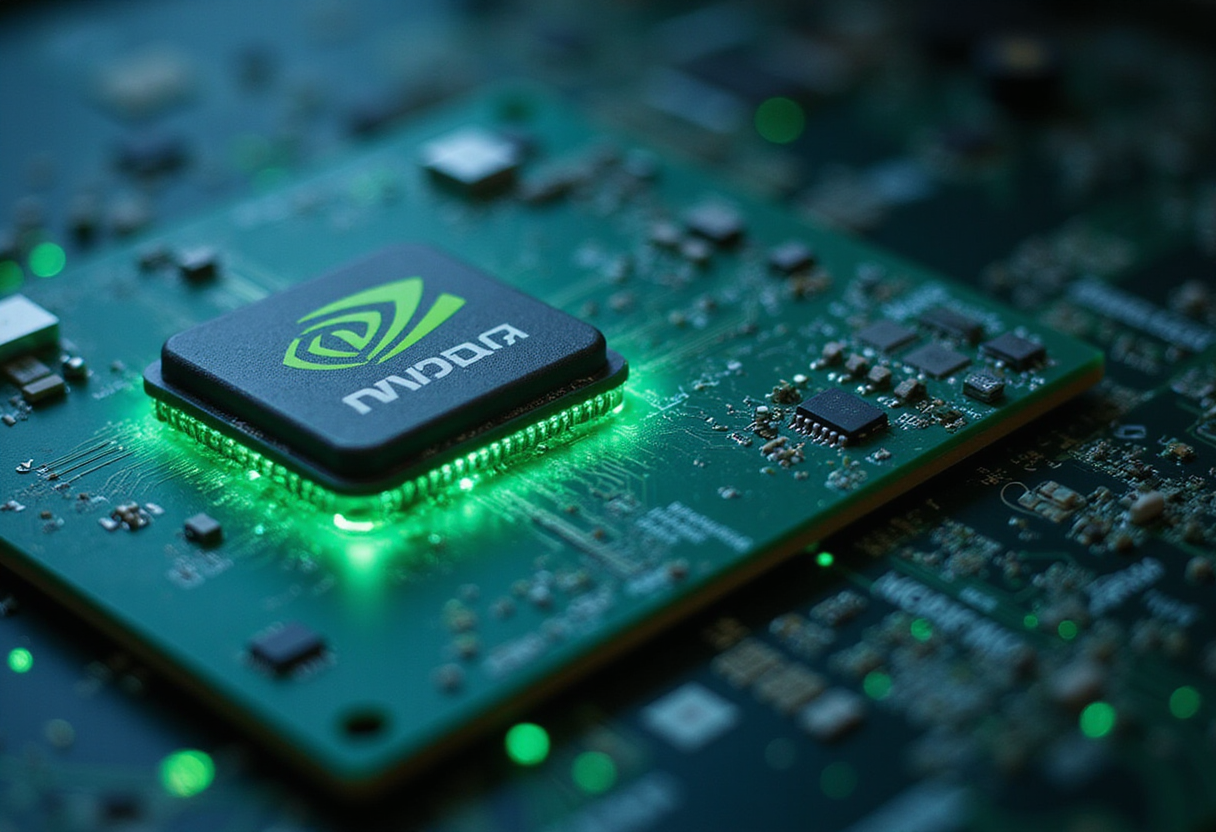
Nvidia and Microsoft have unveiled an AI-focused PC processor scheduled to ship this fall, and the announcement immediately split the chip sector. Nvidia rose 2.4% and Microsoft gained 3.3% in premarket trading, while AMD and Intel each fell more than 4% and Qualcomm dropped 8.6%, according to Reuters.
Nvidia describes the chip as the product of a three-year partnership with Microsoft aimed at shifting more AI workloads onto laptops and desktops, rather than routing every request to remote data centers. The strategic logic is straightforward. Once AI features are built into Windows and marketed as essential, computer makers will begin treating "AI-ready" processors as table stakes for new models.
The market's sharp reaction reflects how investors price design wins in the PC industry. A design win — selection for a specific laptop line — locks in sales for an entire model year, because brands rarely swap processors mid-cycle. The premarket moves therefore represent a rapid repricing of who captures the fall laptop slots.
Qualcomm's 8.6% drop shows how quickly the PC pecking order can shift.
This is not simply another chip announcement. It is a distribution play tied to Windows. If Microsoft optimizes certain AI features for the Nvidia-built processor, PC brands may favor it to keep their laptops competitive, and that preference can squeeze rivals' volumes for a full refresh cycle.
Near term, this sets up more volatile relative moves across PC chip names, as each new laptop launch signals which supplier is in and which is out. A single design-win announcement can move a stock by several percentage points, as Qualcomm's decline demonstrates.
The longer-run question concerns platform control. The chip that attracts the most developers and software tools can create a feedback loop that keeps winning future designs. For Nvidia, the stakes extend beyond the PC segment itself: on-device AI could become a second growth engine alongside its data-center business, which has driven the company's recent expansion.
The alternative scenario favors rivals. If AMD, Intel, or Qualcomm match the new processor's performance and offer comparable software support, they may retain enough share to blunt the distribution advantage that Microsoft's involvement provides.
Both outcomes now hinge on the fall launch. Laptop makers will reveal their processor selections as they announce new models, and each announcement will serve as a data point on whether the Nvidia-Microsoft partnership converts Windows integration into sustained design wins, or whether incumbents hold their positions.
via finimize.com (Original)
More from Elena Vasquez
Show full bio
Senior reporter covering industry trends and analytics at Die Signal.
53 articles
Same lot · LOT-C1D0
- DSG-120210nmNvidia Announces Largest Buyback in Its History Amid AI Chip Competition
- DSG-28953nmNVIDIA Unveils RTX Spark AI Superchip
- DSG-69337nmNvidia Launches 'RTX Spark' AI PC Chip, Targeting Intel and AMD
- DSG-270514nmBroadcom's Custom Silicon Unit Emerges as AI Chip Force
- DSG-23785nmBroadcom's Custom Silicon Unit Emerges as AI Chip Force