Test report · tested November 28, 2026
Edge AI SiliconDevice under test
Nota Cuts Robot Task Time From 36 Seconds to 12 Seconds
Nota reports compression cut Solar Open2 from eight H100s to two and Qwen 3.8 Max from 24 B300s to four, while a robot task fell from 36 seconds to 12 on-device.
- Read
- 4 min
- Words
- 892
- Segment
- Edge AI Silicon
- Operator
- Priya Raman
Spec summary
- Robotic arm object-moving time fell from 36 seconds to 12 on Qualcomm's Dragonwing IQ-9075.
- Solar Open2 compression cut the workload from eight Nvidia H100 GPUs to two.
- Qwen 3.8 Max compression cut the requirement from 24 B300 GPUs to four.
- Deloitte expects inference to reach two-thirds of AI computation this year, up from one-third three years ago.
- Arm Create 2026 in San Jose featured hands-on model-optimization sessions in October.
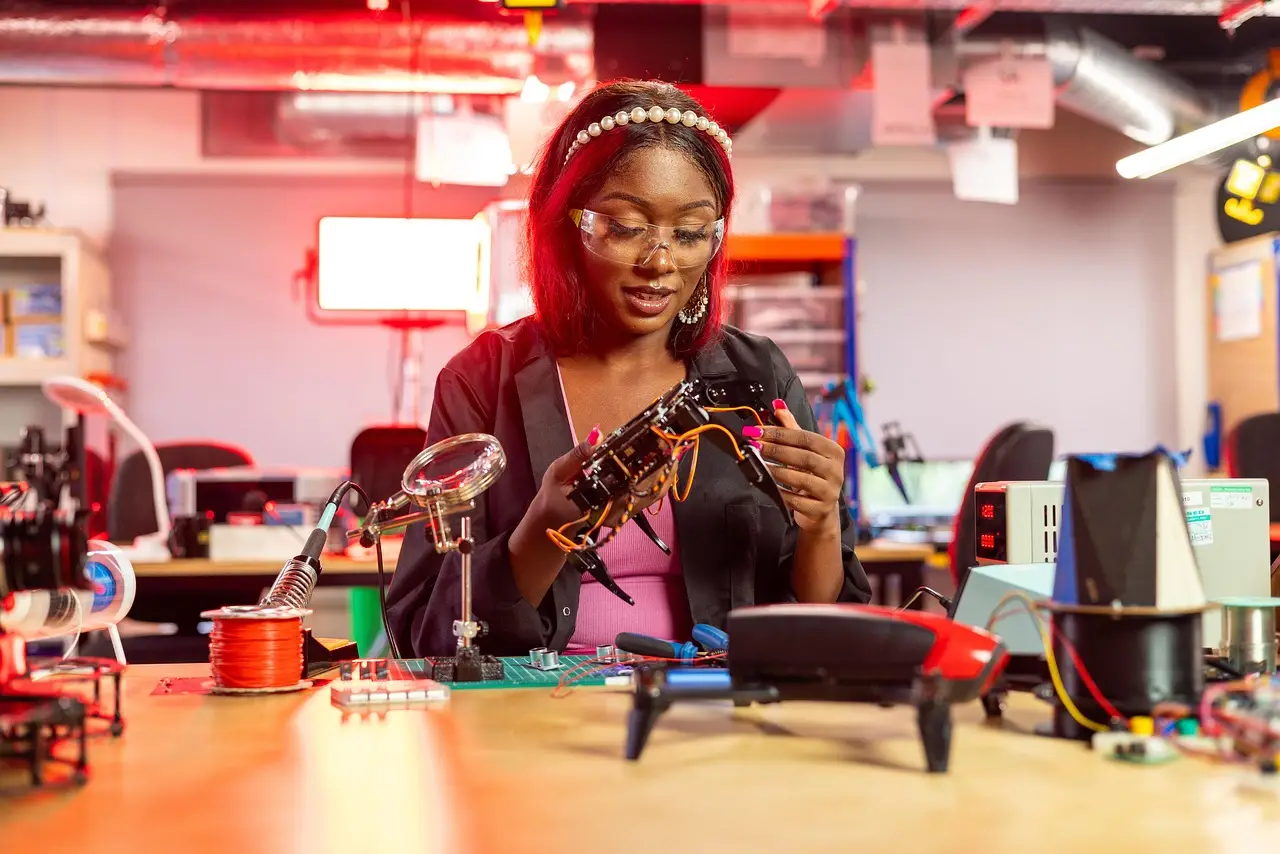
Nota cut a robotic arm's time for moving an object from 36 seconds to 12 seconds in a demonstration based on Qualcomm's Dragonwing IQ-9075 chip. The model chose each next action from camera footage and language commands. Inference (running a trained model) ran on the chip's neural processing unit (an on-device AI accelerator), not an external server.
Where is Nota expanding compression?
Nota (486990.KQ) develops optimization technology for artificial intelligence models. It is now extending that work into AI agents (software that performs tasks autonomously) and physical AI (systems that act in the physical world), including robots. The target is rising inference cost as demand grows and systems move beyond text generation and question answering.
Nota frames the competitive standard as economic efficiency rather than model intelligence alone. The expansion details specify no product, launch date, or revenue target.
Why is inference becoming the larger cost?
Compression makes a trained model lighter by reducing memory use and computation. A smaller model needs fewer computing resources to run. Deloitte estimates inference represented one-third of all AI computation three years ago. It expects the share to reach two-thirds this year, overtaking training.
That shift turns deployment economics into a technical constraint. Nota adviser Yoo Seung-joo, a Seoul National University computer science and engineering professor, gave a favorable assessment of Nota's compression business in Korea. In a recent interview at the university, Yoo said Nota develops proprietary technology by solving problems that research papers alone cannot explain.
The interview provided no revenue, margin, customer count, or pricing data. The commercial scale of the business therefore remains unverified.
How do the compression methods differ?
Nota's core method is pruning. Pruning removes weights (numeric model parameters) with little effect on a trained model's output. It works like trimming small branches from a tree so the remaining structure grows better.
Across these methods, the engineering trade-off is clear: graph optimization changes execution paths, while pruning and quantization can change a model's output quality in some cases.
- Quantization represents data in 8-bit or 4-bit units instead of 32-bit units, reducing memory demand and arithmetic cost.
- Graph optimization reduces how often data moves to high-bandwidth memory and reorders operations for faster processing.
Yoo said: "Graph optimization does not degrade the quality of computational results, while quantization and pruning affect quality to some degree." He added: "Quality may drop slightly, but it is important to hold the right line so that it does not show."
The statement gives no error-rate or benchmark thresholds. It also does not define what level of quality loss remains acceptable for an agent making a physical control decision.
What do the model tests show?
Upstage's recently released Solar Open2 is one disclosed result. Work that required eight Nvidia H100 graphics processing units (GPUs) ran on two after Nota applied its compression technology. For Alibaba's Qwen 3.8 Max, Nota reduced the requirement from 24 B300 GPUs to four.
Across Solar Open2 and Qwen 3.8 Max, Nota reports reductions on two model families and two different GPU platforms, without independent quality checks or cost comparisons.
The figures concern hardware counts rather than workload details. The interview gives no throughput (completed work per unit time), latency (response delay), accuracy, or cost baseline. That limits independent comparison.
How does developer access expand?
Nota is extending its compression technology to developers worldwide with Arm, the British chip design company. At Arm Create 2026 in San Jose in October 2026, Arm supported hands-on sessions in which developers optimized AI models with the tool themselves.
The sessions tested direct developer use. The material does not establish general availability (routine commercial availability), list supported models, or disclose commercial terms. The expansion therefore has a documented developer session, but no disclosed availability schedule.
Why does robotics amplify the need?
AI agents increase the value of compression because each agent run can incur token costs (the expense of processing language units) for repeated inference on a large language model. Robots lead the physical AI market and add a timing constraint.
In the Dragonwing IQ-9075 demonstration, Nota moved an object in 12 seconds, down from 36 seconds, by placing inference on the device's neural processing unit.
Yoo said: "For robots to make critical judgments and exercise control in real time, computing power has to be large." He continued: "Realistically, compression technology will become more necessary to make robots work on limited computing infrastructure."
The report gives no repetition count, success rate, workload definition, or quality measure for the robotic task. It cannot establish whether 12 seconds was repeatable or how the result compares with other optimization methods.
What does this change in the market?
Nota is betting that inference economics will decide adoption as agents and robots expand deployment. Its disclosed reductions span eight H100s to two for Solar Open2, 24 B300s to four for Qwen 3.8 Max, and 36 seconds to 12 for the robot demonstration. Arm's developer sessions extend the technology beyond Korea.
Every cited result comes from Nota or its adviser, however. The material provides no independent benchmark, customer economics, or general-availability timetable. The measurable market impact is therefore a set of hardware and latency reductions, not evidence of broad commercial adoption.
via en.sedaily.com (Source)
More from Priya Raman
Show full bio
Correspondent covering money, funding and market shifts around hardware layer of artificial intelligence at Die Signal.
787 articles
Same lot
- Google Ships LiteRT QNN Accelerator for Qualcomm NPUs
- Microsoft: AI Agents Need Up to 3,000 Times the Computing of Chatbots
- SiMa.ai raises $150m at $1.45bn valuation for physical AI chips
- Microsoft Maia 300 Bets on Power and Memory Over Raw Speed
- Microsoft to deploy huge fleet of in-house AI chips for cost savings