Test report DSG-7202 · Rev C · tested October 10, 2026
Supply Chain & PolicyDevice under test
Northrop Grumman: US Chip Production to Quadruple by 2030
Northrop Grumman projects US semiconductor production will quadruple by 2030, strengthening defense supply chains through domestic expansion now under way.
- Read
- 3 min
- Words
- 539
- Node
- 28nm
- Operator
- Elena Vasquez
Spec summary
- Northrop Grumman projects US chip production will quadruple by 2030.
- The forecast ties output growth to a domestic manufacturing expansion already under way.
- The company frames the increase as strengthening defense semiconductor supply chains.
- Target year for the fourfold production increase is 2030.
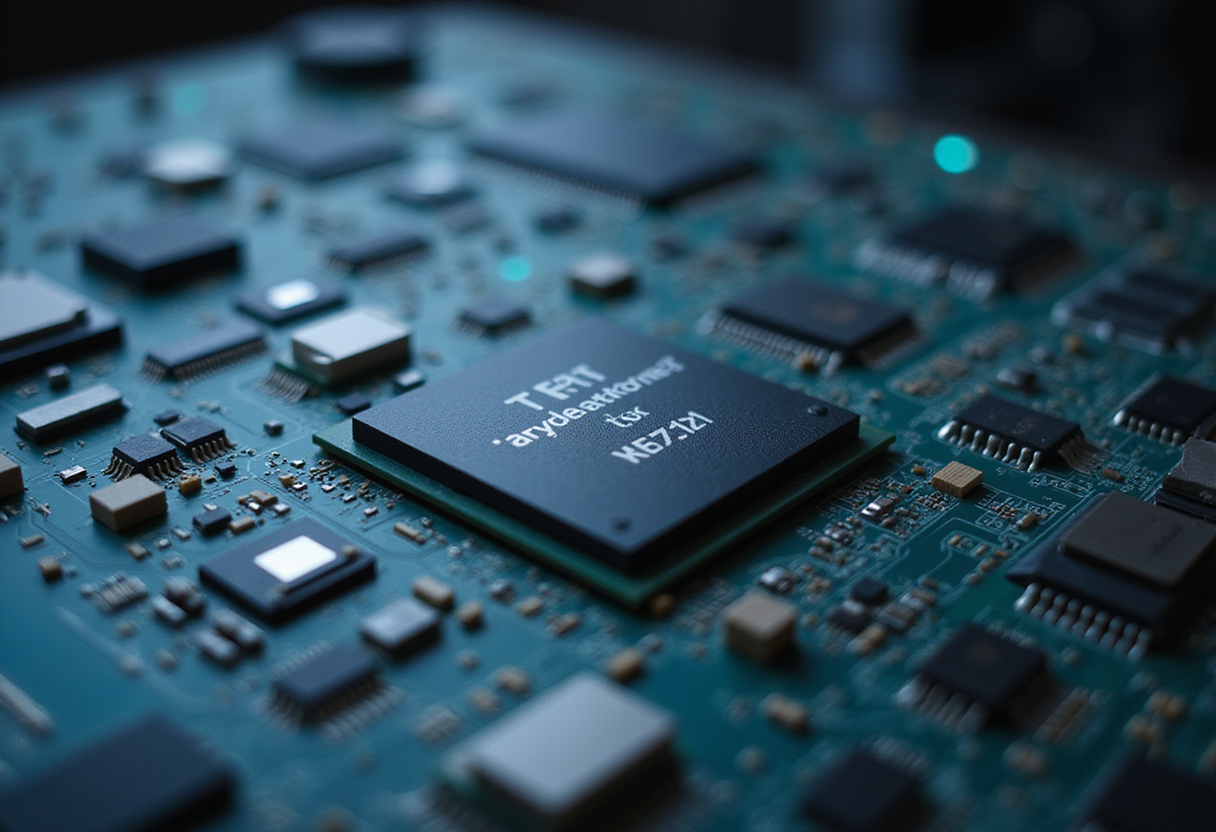
US semiconductor production will quadruple by 2030, according to Northrop Grumman, which says an ongoing expansion of domestic manufacturing capacity will strengthen defense semiconductor supply chains.
The projection comes from the defense contractor itself, positioning it as one of the most concrete timelines yet offered by a major prime on when American chipmaking capacity will reach a scale relevant to defense procurement. The fourfold figure covers aggregate US production and is tied to expansion efforts already under way rather than to future policy decisions.
Why does a defense prime care about chip output?
Semiconductors sit at the core of nearly every modern weapons platform. Missiles, radar, electronic warfare suites, satellites and communications systems all depend on advanced chips, and defense demand competes for the same fabrication capacity as commercial electronics.
Northrop Grumman's statement frames the projected production increase as a supply-chain question. A larger domestic manufacturing base reduces the exposure of US defense programs to foreign fabrication nodes and to disruption in overseas logistics — a concern that has driven bipartisan pressure in Washington to rebuild American semiconductor manufacturing.
What does the fourfold increase mean in practice?
A quadrupling of production by 2030 implies that output in that year would stand at four times the baseline level against which the company measured the expansion. Northrop Grumman links this growth to capacity expansion now in progress, indicating the company views the build-out as sufficiently advanced to anchor a firm forecast.
For defense suppliers, the significance is straightforward: more domestic capacity means more wafer supply available for military-qualified components, shorter qualification cycles for new parts, and reduced reliance on offshore foundries for chips that must meet stringent security and provenance requirements.
Who benefits from the stronger supply chain?
The primary beneficiary named in the company's projection is the US defense industrial base. Programs that require trusted, domestically produced semiconductors gain a deeper pool of suppliers as output expands.
Northrop Grumman itself, as a major integrator of missile systems, space assets and advanced sensors, stands to draw on that expanded capacity for its own product lines. The company's decision to publicize the projection also signals to policymakers and partners that it sees the domestic chip expansion as credible and on schedule.
What is the timeline?
The target year is 2030. Northrop Grumman presents the quadrupling as an outcome of the current expansion trajectory, not as a conditional goal dependent on additional investment. That framing matters: forecasts from defense primes typically reflect internal supply assessments, which in turn shape contracting decisions and component sourcing strategies across the industry.
What remains unresolved?
The company's statement does not detail which fabrication nodes, which manufacturers, or which specific investment programs will deliver the added capacity. Defense-grade chips often require mature process nodes as well as leading-edge ones, and the balance between the two in the projected output remains unstated.
Industry observers will also watch whether the 2030 milestone holds as construction schedules, equipment delivery and workforce constraints play out across the domestic semiconductor sector. For now, Northrop Grumman's forecast stands as a marker: the defense supply chain is expected to look substantially more domestic — and four times larger in production terms — by the end of the decade.
via Google News: Semiconductor supply chain (Source)
More from Elena Vasquez
Show full bio
Senior reporter covering industry trends and analytics at Die Signal.
247 articles
Same lot · LOT-C1C6
- DSG-481065nmSIA Releases 2026 State of the U.S. Semiconductor Industry Report
- DSG-622665nmUS Commits $874m to Semiconductor Supply Chain via CHIPS Act
- DSG-287820nmOpinion: Advanced nodes, capacity and geography reshape semiconductors
- DSG-85827nmAMD Plans 'Substantial' 2027 AI Accelerator Ramp as Demand Outruns Supply
- DSG-662620nmMicron raises US manufacturing commitment to $253 billion