Test report · tested November 25, 2026
Supply Chain & PolicyDevice under test
Nasdaq Slides Over 4% as Nvidia Drops 9% and AI Selloff Accelerates
Nasdaq opened over 4 percent lower and Nvidia fell around 9 percent as the AI stock selloff accelerated. Huang's return rally lasted days, and a Congress hearing awaits next week.
- Read
- 3 min
- Words
- 659
- Segment
- Supply Chain & Policy
- Operator
- Elena Vasquez
Spec summary
- Nasdaq opened more than 4 percent lower; Nvidia shares dropped roughly 9 percent.
- DAX fell back below the 25,000-point mark as the selloff spread internationally.
- Anthropic, which went public last week, plunged another 9 percent.
- Jensen Huang must answer questions before the US Congress next week.
- US rate-hike expectations and anticipated AI data center rules deepen investor doubts.
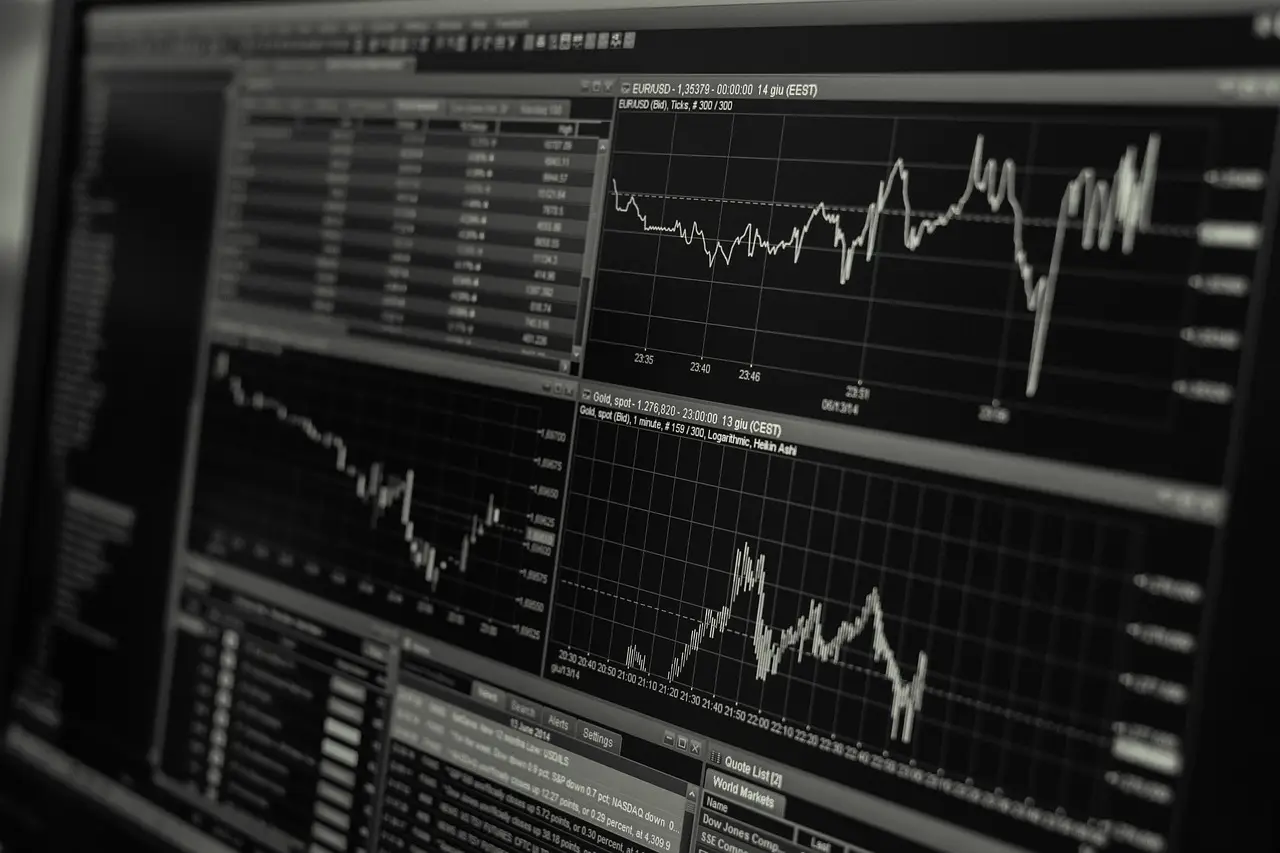
The Nasdaq opened more than 4 percent lower in New York, and Nvidia shares fell roughly 9 percent as the selloff in AI-focused tech stocks accelerated. The DAX couldn't escape the drag either: Germany's benchmark index dropped back below the 25,000-point mark.
Anthropic, the AI developer that only went public last week in a spectacular debut, plunged another 9 percent. Tech and AI titles pulled sentiment down across international markets.
How long did the Huang rally last?
Not long at all. Nvidia shares briefly spiked early this week after Jensen Huang's reinstatement as CEO, then went into reverse yesterday and collapsed further today. The market euphoria over his return, it turns out, lasted days.
That brevity has a lot to do with what Huang and the company he co-founded actually represent, experts say. Nvidia didn't become the AI industry's lead company solely through its internationally in-demand high-performance chips. The strategy Huang pushed mattered at least as much.
"Jensen Huang is very important for the entire AI ecosystem, because at Nvidia he pushed, among other things, to finance second- and third-tier AI companies very aggressively," said Chris-Oliver Schickentanz of Capitell AG.
How did Nvidia's expansion actually work?
Andreas Lipkow of CMC Markets describes the money cycle: "This money was reinvested, for example, via cross-shareholdings in other companies, through lending, or through corresponding supply obligations entered into with other companies." Those companies, in turn, bought Nvidia's chips.
That loop helped not just Nvidia but the whole sector — from chips to operating systems to infrastructure such as data centers. Huang also functions as the industry's mouthpiece. "He's the model manager who's always cited when it comes to AI and growth prospects," Schickentanz said.
Huang is considered well-connected and has been perceived internationally as a kind of "AI ambassador." He brokered deals with governments, recently including in Germany.
What does the Congress hearing change?
The core problem: investors are realizing the scandal around Huang and Nvidia didn't end with his return — it may just be getting started. President Donald Trump and his circle insist Huang's return to the top of Nvidia poses no security risk for the United States. But parts of both the Democratic and Republican parties have doubts and want to dig in.
Next week, the reinstated CEO must answer questions before the US Congress. "What needs to be clarified now is whether Jensen Huang behaved in a legally compliant way, and above all what the consequences of Nvidia's business with, for example, China were," Lipkow said.
There are also doubts about Nvidia itself and the board's decision to reinstate Huang under influence from Trump. "That raises questions," Schickentanz said. Doubts have emerged "whether Nvidia has the right structures in the company to efficiently control powerful people like Jensen Huang."
Could a trust deficit damage the capital market?
Depending on what the US investigations find, Nvidia's reputation could take a hit — poison for standing in financial markets. Klaus Nieding of the Deutsche Schutzvereinigung für Wertpapierbesitz (DSW) put it bluntly: "If the rules don't apply equally to all market participants, then a whole lot of trust is lost. That money actually avoids such marketplaces."
Is the old AI question getting louder?
Yes — and it predates the Huang affair. Investors keep asking whether the multibillion-euro investments in AI infrastructure will ever pay off, whether the race for AI applications will actually produce profits.
Those worries have sharpened recently. High inflation makes further US rate hikes more likely, and higher rates make the credit that tech companies urgently need more expensive. That eats into potential profit — a bad sign for many investors.
One more factor: after the Democrats' win in the US Congress, stricter rules for building AI data centers in the US are expected. The question marks around the AI boom, in short, keep getting bigger.
via tagesschau.de/xml/rss2/ (Source)
More from Elena Vasquez
Show full bio
Senior reporter covering people, launches and day-to-day practice in hardware layer of artificial intelligence at Die Signal.
787 articles
Same lot
- Nvidia gains $950bn as Huang returns and Nasdaq 100 rises 6.86%
- Nvidia sheds 6% after record $952 billion single-day rebound
- Nvidia founder’s return lifts shares over 30%, S&P above 4.5%
- Nvidia Sheds $650 Billion in a Week as Huang Exit Hits AI Sector
- Nvidia Drops Nearly 15% on Jensen Huang's Exit — and Recovers