Test report · tested November 28, 2026
Processors & AcceleratorsDevice under test
Michael Burry Exits AI Shorts as Nasdaq Posts 6% Weekly Gain
Burry's exit from AI shorts helped the Nasdaq to its best week since April. Nvidia's Huang is back, chip exports top oil at $1.61 trillion — but a 98% rate-hike odds and memory-price warnings linger.
- Read
- 4 min
- Words
- 896
- Segment
- Processors & Accelerators
- Operator
- Grace Kim
Spec summary
- Nasdaq rose more than 6% this week, its largest weekly gain since April, after Burry closed his AI shorts
- Semiconductor exports reached $1.61 trillion, surpassing oil and gas exports for the first time
- FedWatch priced a 98.4% chance of a 0.25-point rate hike at the December FOMC meeting
- BNP Paribas cut Micron's price target to $775 from $1,700 on a 2028 memory oversupply warning
- Jensen Huang returns as Nvidia CEO and testifies before House panels on December 1
Michael Burry, the investor famous for betting against subprime mortgages before the 2008 crisis and the most prominent bear on AI-linked stocks, has closed his short positions entirely, and the Nasdaq Composite responded with its biggest weekly gain since April — more than 6%.
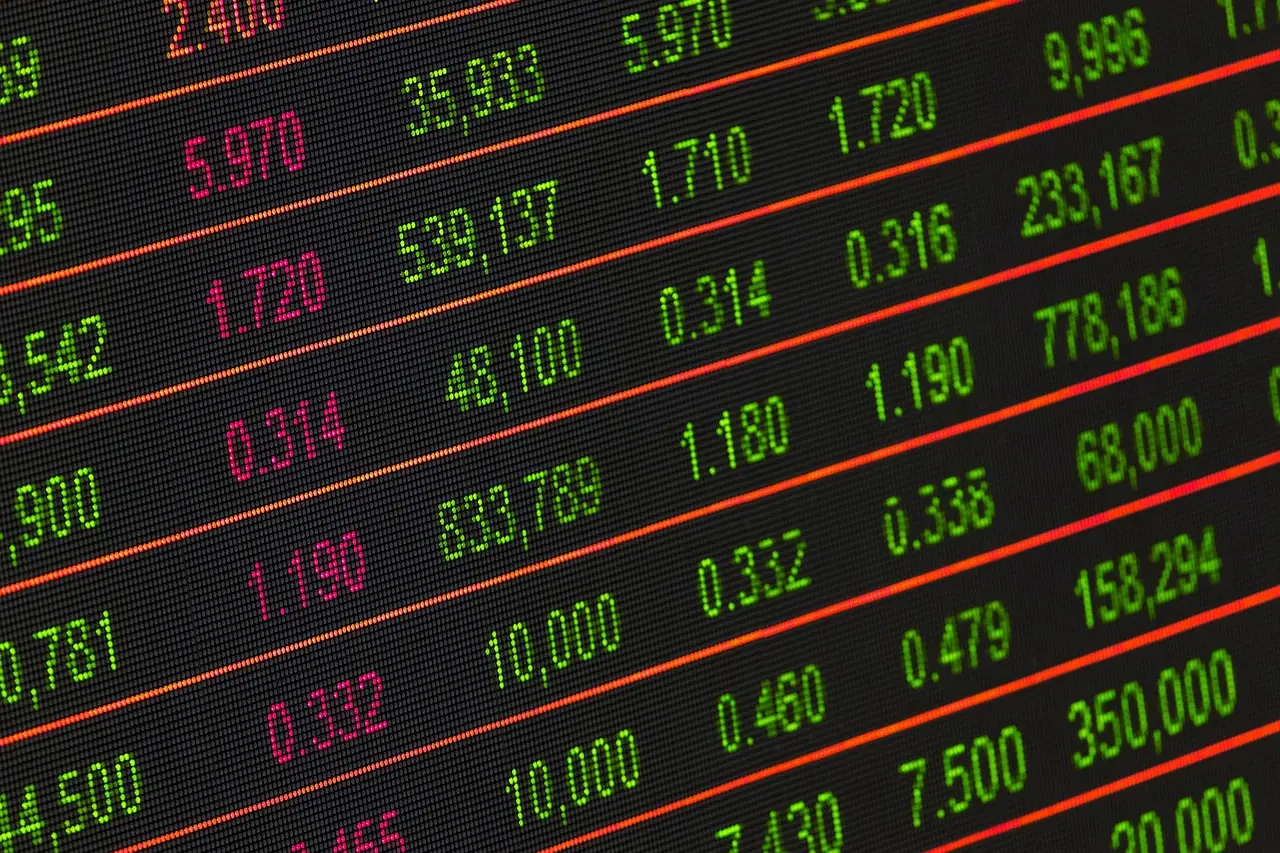
The Dow Jones Industrial Average rose 5% for the week, its strongest advance since October 2022; the S&P 500 gained more than 5%, its best week since last April. On the 27th alone, the Dow closed up 1.18%, the S&P 500 up 1.60% and the Nasdaq up 2.31%.
Semiconductors led. Micron jumped 7.34%, SK hynix rose 7.38%, AMD added 4.89%, Broadcom gained 3.81% and SanDisk surged 15.96%, lifting the Philadelphia Semiconductor Index 4.69%. Anthropic, developer of the Claude AI model, climbed 10.98% to $91.88 — back above its $83 offering price for the first time in three sessions.
No catalyst drove the rebound. It was bargain hunting, plus one disclosure: Burry's. According to Bloomberg, he wrote on Substack on the 25th that he had closed put options betting on declines and shifted most of his portfolio to long positions, keeping puts only on Palantir and MetLife. He said he held about 25% of his assets in cash.
Burry's reasoning: shorting had stopped paying.
As the volatility index, or VIX (a gauge of expected market swings), climbed and share prices fell, puts on even stable AI-infrastructure companies had become very expensive, he wrote. It was difficult to profit from betting on market weakness at this point. On Nvidia, Burry said he held call options purchased on the 20th and planned to short the stock again near $200 a share once the market turns optimistic.
What does the Nvidia turmoil mean?
Nvidia's stock hit a 52-week low of $125.52 on the 20th, just before CEO Jensen Huang's abrupt return. The shares jumped 31.48% on the 23rd when he came back, but management uncertainty persists: at $150.49 on the 27th, the stock sits 13.38% below its $173.73 level of the 11th, before Huang stepped down, and 37.10% below the record $239.24 set on the 6th of last month. Nvidia rose just 0.80% on the 27th while other chips rallied.
Huang resigned on the 12th over allegations of extramarital relationships with Alice Huang, suspected of being a Chinese agent, and with Kimberly Powell, Nvidia's vice president for health care. Board chairman Harvey C. Jones said flatly at the 17th earnings call there was no intention of bringing Huang back — then reversed course five days later. Alice Huang is suspected of diverting $7.5 billion worth of Nvidia chips to China through Megaspeed, a Singapore company where she was an executive.
President Trump, who intervened in the Nvidia board to secure Huang's return, defended the move at Mar-a-Lago on the 26th: based on information and belief, he said, he saw no problem whatsoever with Huang.
Chips now outweigh oil
Deutsche Bank reported that global semiconductor exports hit $1.61 trillion in the year through the first quarter, overtaking crude oil and gas exports of $1.53 trillion for the first time. On a second-quarter basis the gap widened: $1.6 trillion for chips against $1.47 trillion for oil and gas. CNBC noted that chip-surplus countries such as South Korea and Taiwan could become the funding source for an AI ecosystem of U.S. big tech, startups and data centers — the role oil exporters once played in recycling surpluses into Treasuries.
The boom is reshaping smartphones. Counterpoint Research said U.S. smartphone shipments fell 9% year-on-year in the third quarter on higher memory prices, and Apple's global market share jumped to 57% from 50%, as the memory shortage hit entry-level Android makers first. Samsung's Galaxy share rose to 25% from 24%; Motorola fell to 8% from 12%; Google to 6% from 7%.
The risks that remain
Inflation is one. The Commerce Department said the personal consumption expenditures price index, the Fed's preferred inflation gauge, rose 3.8% year-on-year in October, and core PCE climbed to 3.3%, its highest since 2023. CME FedWatch priced a 98.4% probability of a 0.25-point rate hike at the December meeting. The 10-year Treasury yield rose 0.08 points on the 27th to 4.936%, ending an eight-session decline.
Memory prices are another. BNP Paribas analyst Karl Ackerman cut Micron to neutral from outperform on the 24th, slashing his price target to $775 from $1,700 and forecasting DRAM and NAND flash supply-demand balance a full year earlier than his original mid-2028 projection. He sees Micron's EPS bottoming at $86 in 2029. TrendForce expects commodity DRAM contract prices to decline from 2028; Goldman Sachs sees roughly 20% price drops for commodity DRAM and NAND in 2028; Morgan Stanley warned of a possible earnings cliff in 2028.
Watch December 1st and 3rd, when Huang testifies before three House panels and the Senate Banking Committee in live-broadcast hearings, and December 4th, when Trump speaks at TSMC's Arizona groundbreaking — the start of a fifth construction phase under the foundry's $265 billion total U.S. investment pledge. The November payrolls report lands on the 4th.
via en.sedaily.com (Source)
More from Grace Kim
Show full bio
Market editor covering regulation, policy and their impact on hardware layer of artificial intelligence at Die Signal.
791 articles