Test report DSG-2985 · Rev D · tested September 29, 2026
Memory & StorageDevice under test
Memory Dies Now Cost More Per Area Than Leading-Edge Compute Silicon
AI demand has pushed DRAM die value past leading-edge silicon per unit area, inverting the traditional semiconductor pricing hierarchy and shifting leverage to memory makers.
- Read
- —
- Words
- —
- Node
- 14nm
- Operator
- Grace Kim
Spec summary
- DRAM dies now cost more per unit area than leading-edge compute chips.
- AI demand for memory is the primary driver of the pricing inversion.
- The shift gives memory makers Samsung, SK hynix and Micron increased pricing leverage.
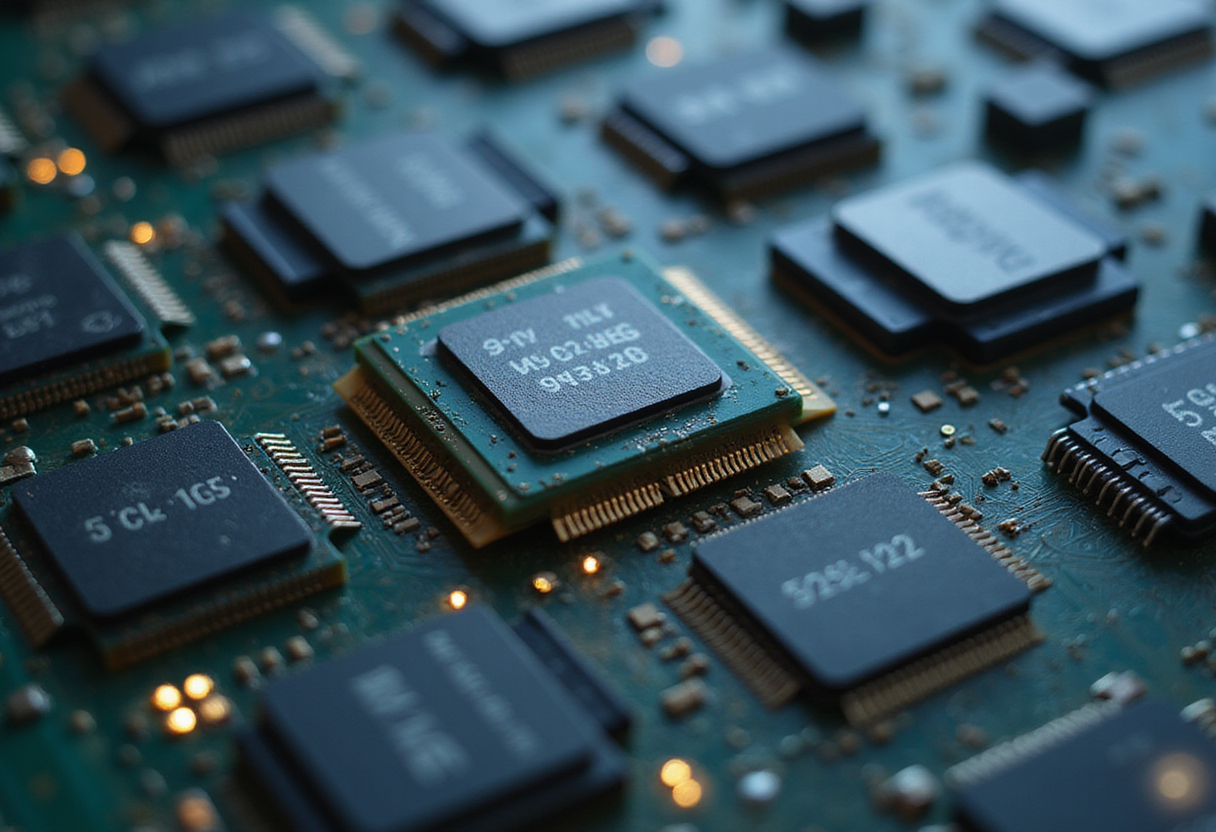
Memory chips have become more expensive than compute chips on a per-area basis, as demand from the AI sector drives the value of DRAM dies past leading-edge silicon, Tom's Hardware reports.
The shift marks an unusual inversion in semiconductor economics. Historically, leading-edge logic — CPUs, GPUs and other processors fabricated on the most advanced nodes — commanded the highest prices per square millimeter of silicon. Memory, a commodity product manufactured at enormous volumes, traded at a discount to compute silicon.
AI workloads have now reversed that relationship. Training and inference for large language models and other AI systems consume memory at enormous scale, with high-bandwidth DRAM stacked alongside accelerator dies becoming a defining feature of AI server hardware. That demand has tightened supply across the DRAM market and pushed per-area value beyond what leading-edge logic dies command.
The development carries direct consequences for the balance of power in the semiconductor industry. Memory manufacturers — Samsung, SK hynix and Micron — gain pricing leverage they have rarely held. Buyers of AI systems face a cost structure in which memory, not compute, can dominate the bill of materials for accelerator modules.
For chipmakers, the economics of wafer allocation may shift as well. When memory dies fetch more per unit area than logic, the incentive structures around fab capacity, capital investment and product mix all come under pressure. Leading-edge logic still requires the most advanced process technology, but the revenue per area comparison now favors DRAM.
The report does not specify the exact price figures or the node generations involved in the comparison. Tom's Hardware frames the milestone as an indicator of how far AI-driven demand has distorted traditional semiconductor pricing hierarchies.
The situation also illustrates a broader constraint on AI hardware growth: accelerator supply is limited not only by advanced logic fabrication capacity but by the memory that feeds those chips. As long as AI builders compete for high-bandwidth DRAM, memory pricing will remain a decisive factor in the cost and availability of AI infrastructure.
via Google News: DRAM chip (Source)
More from Grace Kim
Same lot · LOT-C1BA
- DSG-87587nmGoogle Wins Approval for 72,400 sqm Dublin Data Center Expansion
- DSG-39483nmSK Group and NVIDIA Expand Partnership on AI Factories and Memory
- DSG-120210nmNvidia Announces Largest Buyback in Its History Amid AI Chip Competition
- DSG-725045nmNetlist Files New ITC Patent Action Against Micron Over HBM Tech
- DSG-59243nmSamsung GaN Foundry Ramp Hits Reliability Snag in Trial Production