Test report DSG-7147 · Rev B · tested November 13, 2026
Supply Chain & PolicyDevice under test
Korea Commits 2 Trillion Won to SMEs in Semiconductor, AI Mega Projects
Seoul will channel 2 trillion won ($1.4 billion) into SMEs tied to semiconductor and AI data center mega projects by 2030, plus a 2 trillion won regional growth fund for startups.
- Read
- 3 min
- Words
- 647
- Node
- 65nm
- Operator
- Grace Kim
Spec summary
- 2 trillion won ($1.4 billion) in financial support for SMEs in mega projects by 2030
- Separate 2 trillion won regional growth fund over five years for regional startups and ventures
- More than 5 trillion won by 2030 for digital and AI transformation under the physical AI strategy
- Plan reported on the 12th at Samsung Electronics' Onyang campus in Asan
- Six new startup cities designated, adding to the four under development
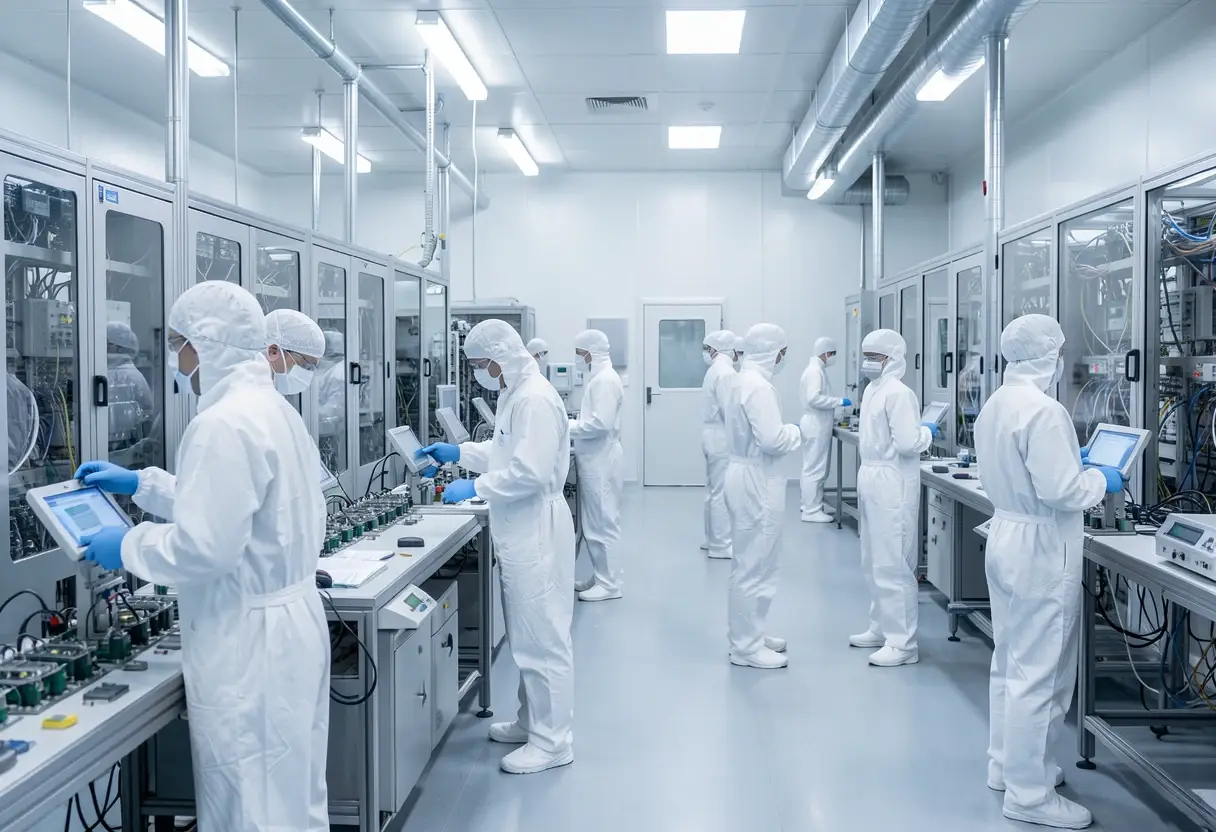
South Korea will pump 2 trillion won ($1.4 billion) into small and medium-sized enterprises by 2030 to pull them into national mega projects such as semiconductors and artificial intelligence data centers. A separate 2 trillion won regional growth fund follows over five years, targeting startups and venture firms outside the capital.
The Ministry of SMEs and Startups presented the plan — titled measures to strengthen the role of smaller firms in spreading the benefits of mega projects — at the fourth public-private review meeting on mega projects. The meeting took place on the 12th at Samsung Electronics' Onyang campus in Asan.
Where does the first 2 trillion won go?
Straight into suppliers. The ministry wants existing suppliers of large and mid-sized companies to add production capacity for mega projects and sharpen their manufacturing edge.
The mechanics:
- A dedicated pool inside the win-win cooperation fund (a shared financing vehicle between large companies and their partners), funded by contributions from large companies
- 2 trillion won in combined investment and loans by 2030
- Spending directed at localizing supply chains through large-SME technology cooperation and strengthening environmental, social and governance (ESG) capabilities
Liquidity is the second front. The ministry will tackle cash bottlenecks at every stage — capital investment, order placement, production, payment. New project finance guarantees will back construction of regional production infrastructure. Loans for production costs will run off purchase orders. And the win-win payment system, which speeds payment terms down the chain, extends to second-tier suppliers and below to close funding gaps mid-chain.
What about the physical AI push?
More money, bigger number. Under a strategy for spreading physical AI (AI embedded in machines and robots) in small manufacturing announced last month, the ministry will invest more than 5 trillion won by 2030 in digital and AI transformation at manufacturers. Demonstrations of leading physical AI models and training of smart manufacturing specialists aim to build the mass-production capabilities mega projects demand.
How does the regional fund work?
Mega project-related companies cluster in the Seoul metropolitan area. The ministry wants that to change. The 2 trillion won regional growth fund, built over five years, brings in anchor large companies, local governments and the fund of funds (the state-managed vehicle investing in private venture funds) as joint participants.
Six more startup cities will be designated, on top of the four now in development. This year, the ministry also plans a realignment of key regional industries aligned with the national growth strategy and local demand, plugging gaps in technology commercialization, demonstration, production and sales channels through inter-regional cooperation.
Councils form this month in each of the country's five regions, grouping smaller firms involved in mega projects. Their job: link those firms with large and mid-sized companies for joint projects, help relocating companies settle in and push regulatory improvements.
What does this change for smaller firms?
Access, mainly. Supply-chain doors open wider, financing reaches deeper into the tier structure, and regional companies get a dedicated capital pool rather than competing for Seoul-centric money.
SME Minister Lee So-young framed the stakes in structural terms. "For the results of mega projects, which mobilize the nation's full capabilities, to spread across the SME sector, we need to open the door to supply chains for more smaller firms and resolve the structural polarization between large and smaller partner companies," she said.
Lee added: "The ministry will serve as a connector between smaller firms, large and mid-sized companies, and central and local governments, and will support efforts to turn the large market opened by mega projects into an opportunity for innovative growth at smaller firms."
Add it up and the state's total commitment runs past 9 trillion won across the three tracks — SME supply-chain financing, the physical AI strategy and the regional growth fund — all landing by 2030.
via en.sedaily.com (Source)
More from Grace Kim
Show full bio
Market editor covering regulation, policy and their impact on hardware layer of artificial intelligence at Die Signal.
565 articles
Same lot · LOT-3629
- DSG-325510nmChungcheong Investment to Rise $16 Billion With 112 Companies
- DSG-153920nmSamsung Breaks Ground on $33 Billion HBM Packaging Push in Asan
- DSG-794028nmSouth Korea's Ruling Party Panel Puts 50 Trillion Won Price Tag on Power Grid Buildout
- DSG-365245nmSamsung Affiliates Commit USD 9.15 Billion to Semiconductor Buildout
- DSG-64405nmSamsung Breaks Ground on $4.1 Billion Asan Packaging Plant