Test report DSG-6191 · Rev B · tested October 9, 2026
Foundries & ManufacturingDevice under test
Intel Terafab deal holds as TSMC takeover rumours persist
Intel's Terafab project has survived the latest round of TSMC takeover speculation, eeNews Europe reports. Contract value, signing date, and direct quotes remain pending full article publication.
- Read
- 3 min
- Words
- 631
- Node
- 65nm
- Operator
- Marcus Bennett
Spec summary
- eeNews Europe headline confirms Intel Terafab deal survived TSMC takeover rumours
- Source headline does not specify contract value, signing date, or parties formally bound by the deal
- TSMC identified as the company linked to the takeover speculation
- No direct executive quotation or regulatory filing referenced in the available source
- Full article body with named sources and detailed terms not yet available
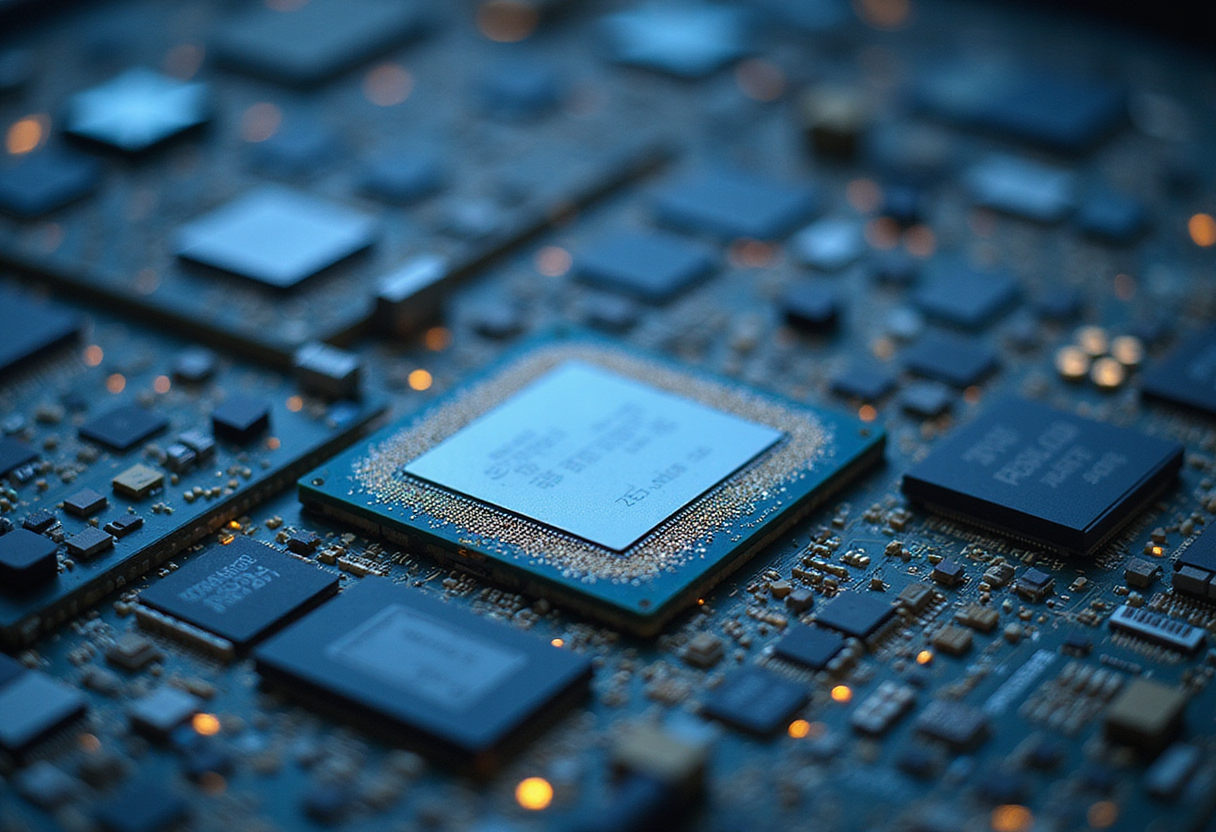
Intel's Terafab project remains in place after a fresh round of speculation that Taiwan Semiconductor Manufacturing Company (TSMC) might pursue a takeover, according to a headline published by eeNews Europe. The trade publication's headline — "Intel Terafab deal survives TSMC takeover rumours" — confirms the arrangement has not been unwound by the latest M&A chatter.
What does the headline tell us?
The wording is brief, but it carries three concrete signals:
- The Terafab deal still stands.
- TSMC-related acquisition rumours remain active.
- The Intel-side agreement has not been restructured.
eeNews Europe did not, in the headline text available to Die Signal, specify:
- The parties formally bound by the deal.
- A contract value, transaction size, or capacity figure.
- A signing date, effective date, or termination trigger.
- A named executive, board resolution, or regulatory filing.
The "Terafab" designation has appeared in semiconductor trade reporting as a reference to a large-scale Intel-aligned manufacturing programme. The source headline does not elaborate on the project's technology node, target wafer output, or fab location.
Why the rumour keeps returning
TSMC is the world's largest contract chipmaker by revenue. Intel has been repositioning its foundry and manufacturing services under a multi-year restructuring programme that has produced repeated news cycles around capacity, ownership, and capital structure. The overlap between the two companies' roadmaps, and Intel's exposure to capital-intensive fab construction, has periodically revived takeover discussion across trade press coverage.
The headline indicates the Terafab agreement is resilient to that pressure. Whether that resilience reflects contract terms, regulatory barriers, Intel board posture, or TSMC strategic disinterest is not stated in the available headline text. Each of those four factors would produce a different kind of durability, and each carries a different competitive signal for the rest of the foundry market.
How durable is "survives"?
A "survives" verdict, even at headline level, is not the same as a confirmed termination of talks. Three observable triggers would shift the story from "rumour survived" to "rumour realised" or "rumour formally dismissed":
- A regulatory filing on either side of the Pacific.
- A joint statement from Intel and TSMC confirming, modifying, or terminating cooperation.
- A material change in Intel's foundry capacity roadmap that retargets Terafab output.
None of those triggers appear in the headline. The publication date of the eeNews Europe item is not included in the source data supplied to Die Signal, so any timestamp on the rumour cycle must wait for the full article.
What readers should watch
Foundry consolidation talk involving TSMC affects pricing, capacity allocation, and geopolitical positioning across the semiconductor supply chain. Equipment vendors, EDA tool suppliers, and design-house customers all read Intel-TSMC headlines against their own order books.
For the equipment side, the specific marker is fab tool order flow tied to Terafab-class construction. Sustained orders indicate the project continues. Cancelled or postponed orders would indicate the rumour cycle has had a real downstream effect. The headline gives no procurement signal either way.
For the customer side, the marker is foundry capacity reservation. Customers with binding or non-binding wafer-start agreements linked to the Terafab programme would see allocation changes if the project shifts ownership, geography, or scope. No allocation data appears in the source headline.
For the regulatory side, the marker is cross-jurisdiction review timing. Any Intel-TSMC transaction would face US CFIUS process and EU merger control on different calendars. None of that procedural detail is captured in the headline.
What comes next
Die Signal will update this item when eeNews Europe publishes the full article body, including named sources, contract terms, and any direct quotations from Intel or TSMC executives. Until then, the single hard fact available to readers is the headline's own statement: the deal has survived the rumour.
via Google News: TSMC (Source)
More from Marcus Bennett
Show full bio
News editor covering marketplaces and e-commerce at Die Signal.
95 articles
Same lot · LOT-C1B0
- DSG-875128nmMusk Settles Terafab Question: Intel to Operate Fab, TSMC Gets Sublease Role
- DSG-50455nmReport: TSMC May Partially Sublease Terafab Linked to Tesla, SpaceX
- DSG-563310nmMusk rules out TSMC operating Terafab: "We will build and run the fab"
- DSG-837445nmIntel Will Keep Working on Terafab, CEO Lip-Bu Tan Says
- DSG-52865nmTSMC Signs $2 Billion AI Chip Deal With GlobalFoundries