Test report DSG-6464 · Rev C · tested November 17, 2026
Foundries & ManufacturingDevice under test
Intel's 18A Works, but Foundry Still Lost $1.85 Billion
Intel's foundry lost $1.85 billion while TSMC earned a 58.7% operating margin. 18A yields improve, but signed 14A customers remain the missing proof.
- Read
- 3 min
- Words
- 599
- Node
- 28nm
- Operator
- Priya Raman
Spec summary
- Intel Foundry lost $1.85 billion in Q3 while TSMC posted a 58.7% operating margin.
- Intel's Data Center and AI revenue rose 78% to $7.32 billion.
- TSMC gross margin slipped 1.3 points to 66.4% as 2nm reached 8% of wafer revenue.
- Intel shares fell 43.3% in a month versus 14.25% for TSMC.
- Intel's 14A 1.0 PDK is due by Q1 next year; TSMC's A14 targets volume production in 2028.
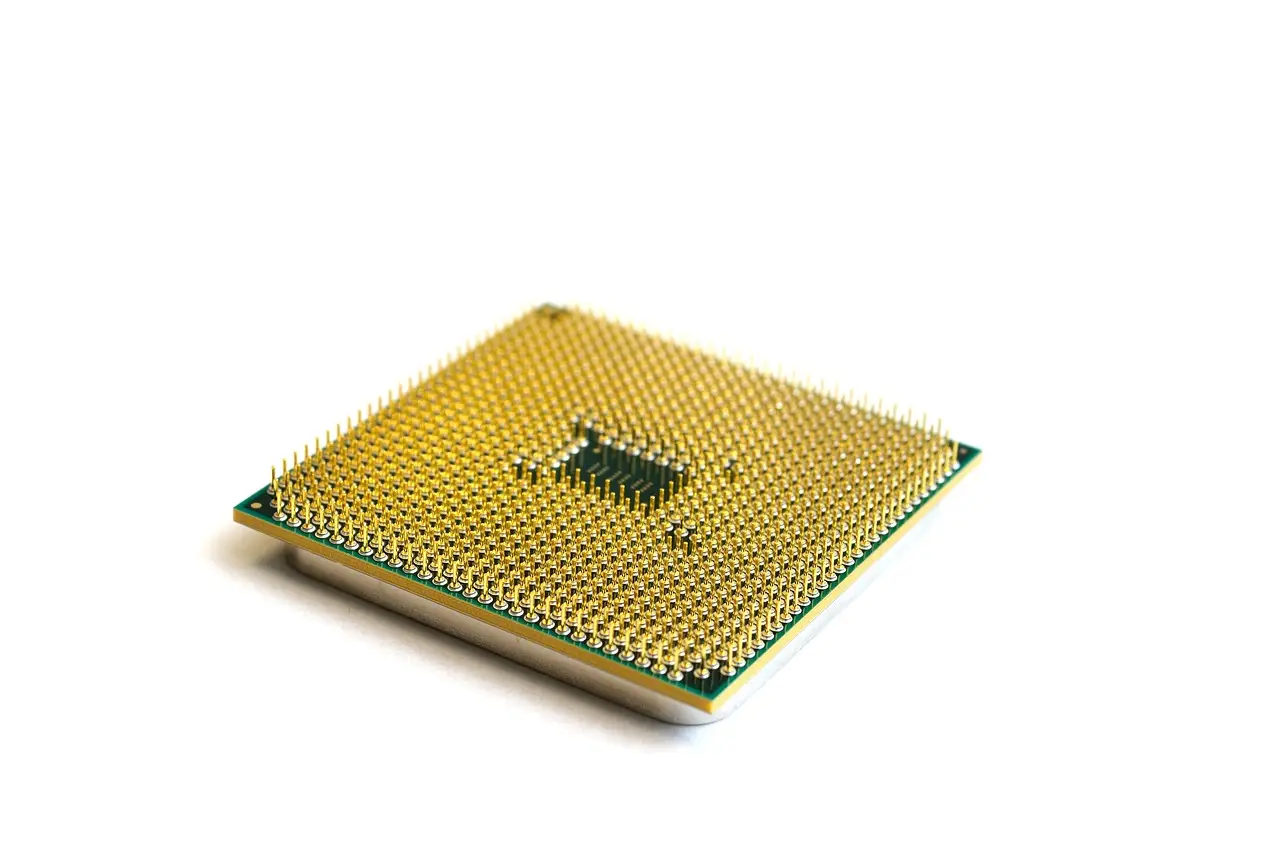
Intel's foundry lost $1.85 billion in the third quarter even as its 18A process node (the company's first 1.8-nanometer-class manufacturing technology) reached working silicon and improving yields. The figure frames the gap between the two chipmakers that reported October results: Intel proved its transistors function; TSMC demonstrated what leading-edge manufacturing looks like once it is already highly profitable.
What did the numbers show?
Servers carried Intel's quarter. Data Center and AI revenue rose 78% year over year to $7.32 billion. Demand still outpaced supply, which caps how much Intel can sell. The AI buildout lifting Xeon server CPU sales also raises orders for power, cooling and networking suppliers outside the chip sector.
On the process side, Intel 18A costs fell roughly 40% since the first quarter. Chips built on 18A grew from under 5% of client CPU revenue to nearly one-third. CFO David Zinsner tempered the progress. He said Panther Lake margins are "not yet at or above the corporate average."
TSMC's problem looks enviable by comparison. Gross margin slipped 1.3 percentage points to 66.4% because 2nm, now 8% of wafer revenue, drags on margins early in its ramp. That cost is temporary. CEO C.C. Wei said demand is "still far above our capability to supply today."
- Growth engine: Xeon server CPUs at Intel; high-performance computing at 68% of revenue at TSMC.
- Leading node: Intel 18A ramping, 14A 0.9 PDK (process design kit, the documentation customers need to design chips) released; TSMC 2nm ramping across Hsinchu and Kaohsiung.
- Foundry profitability: $1.85 billion operating loss at Intel; 58.7% operating margin at TSMC.
Who is betting on High-NA lithography first?
Intel is moving early on High-NA EUV (extreme ultraviolet lithography tools with higher numerical aperture, enabling finer chip features) with ASML, trying to pull ahead in lithography. TSMC plans to adopt High-NA starting in 2030, once tool costs make sense. Wei dismissed the timing risk. TSMC remains "the best company to offer the most advanced technology to our customers," he said.
Scale lets TSMC wait. The company served 534 customers in 2025, spreading each node's cost across many buyers. Intel's external foundry revenue was just $411 million, mostly from a nonrecurring program. That is a thin base for a business seeking outside customers.
What decides who pulls ahead?
Two dates matter. Intel's 14A 1.0 PDK is due by the first quarter of next year. CEO Lip-Bu Tan expects advanced-packaging customer announcements within the next two quarters. TSMC's A14 node targets volume production in 2028, roughly matching Intel 14A timing.
The gap is funding. Zinsner said there is "probably not a dynamic where we're going to have positive free cash flow next year." Every roadmap promise Intel makes therefore rests on continued capital access, and the CFO's own words concede the constraint.
Why does TSMC hold the edge?
Investors have already marked down Intel's optimism. Its shares fell 43.3% over the past month, compared with 14.25% for TSMC. The market wants signed customers before it pays for the roadmap.
Intel can plausibly match TSMC on 14A physics. Matching yield consistency, customer trust and economic scale is a much harder task, because process parity does not pay for fabs and a $1.85 billion quarterly loss does not negotiate. Intel's Xeon momentum and U.S. fabs give its turnaround real drivers. TSMC's pricing power supports steadier compounding. A named, high-volume 14A customer would change that comparison quickly.
via 247wallst.com (Source)
More from Priya Raman
Show full bio
Correspondent covering money, funding and market shifts around hardware layer of artificial intelligence at Die Signal.
661 articles
Same lot · LOT-362D
- DSG-27437nmIntel’s $15B-$16B Q4 2026 Guide Puts 2027 Cash Flow at Risk
- DSG-248910nmIntel Trades at $62.50 as Server Growth Meets 2027 Risk
- DSG-49195nmTSMC Posts Record Q3 Profit of $23.55 Billion on AI Demand
- DSG-239310nmTSMC Posts Record $46.7 Billion Q3 Revenue on AI Demand
- DSG-904214nmTSMC Posts Record T$1.49 Trillion Q3 Revenue on AI Demand