Test report DSG-1987 · Rev F · tested October 30, 2026
Edge AI SiliconDevice under test
HPE to run lunar AI and HPC benchmarks in late 2026
Scheduled for late 2026, HPE’s Spaceborne Computer-4 will run AI workloads and lunar HPC benchmarks on Astrolab’s FLIP rover after Griffin-1 lands near the Moon’s South Pole.
- Read
- 3 min
- Words
- 614
- Node
- 65nm
- Operator
- Amara Osei
Spec summary
- One Spaceborne Computer-4 will fly on Astrolab’s FLIP rover in a mission targeted for late 2026.
- NASA’s CLPS initiative covers the mission, which includes the first high-performance computing benchmarks on the Moon.
- Voyager Technologies’ Griffin-1 lander will deliver FLIP near the lunar South Pole.
- HPE sent its first Spaceborne system to the ISS in August 2017; it returned to Earth in June 2019.
- The more powerful Spaceborne-2 reached the ISS in 2024.
By Amara Osei
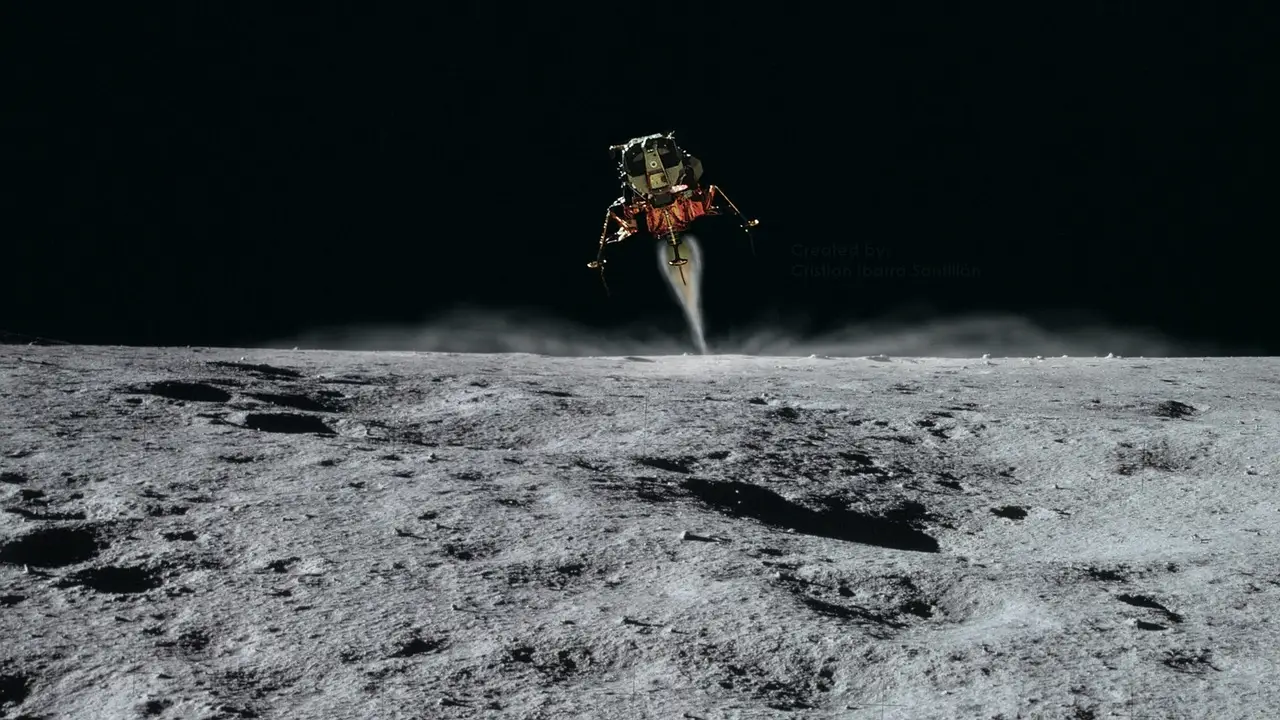
HPE announced this month a plan to place one Spaceborne Computer-4 on the Moon in a mission targeted for late 2026, where it would run AI workloads and the first high-performance computing benchmarks on the surface.
What hardware will reach the Moon?
Spaceborne Computer-4, a new compute module built for space environments, will travel as a payload on Astrolab’s FLIP rover. The unmanned, solar-powered rover will test technologies and payloads as Astrolab’s first vehicle for deployment on the lunar surface. Voyager Technologies’ Griffin-1 lander will deliver FLIP after landing near the lunar South Pole region.
California-based Astrolab aims to develop a fleet of multi-purpose commercial planetary rovers. Its FLIP platform will carry HPE’s module for a mission supporting Astrolab’s Moon Base program.
HPE describes Spaceborne-4 as a lightweight, self-contained and fanless computer designed to withstand the Moon’s harsh environment, particularly near the South Pole. The module pairs a low-power central processing unit with a graphics processing unit. KIOXIA solid-state drives supply flash-memory storage.
The system will run core AI applications, including large language models, and process LiDAR data while executing the first high-performance computing benchmarks on the Moon. Results will inform future missions.
The lunar payload will place AI, HPC and sensor processing directly on the rover.
What will the mission test?
NASA’s Commercial Lunar Payload Services (CLPS) initiative covers the mission targeted for late 2026. The deployment will assess whether advanced computing can operate on the lunar surface and whether it can support future missions and the emerging lunar economy.
HPE will provide Astrolab’s mission control in Hawthorne, California, with a private cloud environment. The arrangement links the rover’s local compute with support for mission operations on Earth.
The mission will test hardware, software and terrestrial support as one system.
How do the partners describe the deployment?
Scott Wiest, HPE vice president, fellow and global sales chief technologist, said: “For more than 70 years, HPE innovation has supported some of the world’s most important space missions. The next chapter of lunar exploration will depend on the ability to turn data into insights at the point of discovery.”
He added: “With HPE Spaceborne Computer-4, we are bringing AI and high-performance computing to the lunar edge, helping the acceleration of scientific discovery and building the infrastructure for the next era of exploration.”
The deployment shifts the test from Earth preparation to operation at the lunar South Pole.
Jaret Matthews, Astrolab’s founder and CEO, said: “The Moon presents a challenging environment for advanced computing, and we’re pleased to provide HPE with an opportunity to demonstrate its technology on the lunar surface.”
He added: “Our FLIP rover is designed to accommodate a variety of payloads, and this mission will demonstrate how commercial lunar mobility platforms can support technology development and scientific research.”
FLIP’s payload role is central to the demonstration.
What precedent do earlier Spaceborne systems provide?
HPE developed the Spaceborne line as a proof of concept for showing that commercial off-the-shelf hardware could survive in space. HPE sent its first Spaceborne system to the International Space Station in August 2017, and it returned to Earth in June 2019.
HPE sent the more powerful Spaceborne-2 to the space station in 2024. The sequence moves from orbital endurance testing in 2017-2019 to a second ISS deployment in 2024 and planned lunar operation in late 2026.
The late-2026 mission will test whether the same commercial computing approach can move from the space station to a solar-powered rover at the Moon’s South Pole.
via Data Center Dynamics (Source)
More from Amara Osei
Show full bio
Staff writer covering money, funding and market shifts around hardware layer of artificial intelligence at Die Signal.
507 articles
Same lot · LOT-C204
- DSG-41665nmHPE Spaceborne Computer-4 Targets First HPC Benchmark on the Moon
- DSG-365910nmGoogle Tests AI Chips in Orbit for Space Data Centre Research
- DSG-435114nmSpaceX to orbit Google AI chips in space-data-center push
- DSG-43097nmHPE Launches First ProLiant Gen 13 Servers Built for AI Inferencing
- DSG-285265nmGoogle's First Suncatcher Satellite Reaches Orbit to Test AI Chips