Test report · tested November 26, 2026
AI Devices & SystemsDevice under test
Google Research: One Pixel Watch Can Estimate 5 Per-Foot Gait Metrics
Google research describes estimating five gait metrics, three per foot, from one Pixel Watch using 50 Hz accelerometer and gyroscope data plus height. A patent is filed; no product is announced.
- Read
- 4 min
- Words
- 765
- Segment
- AI Devices & Systems
- Operator
- Marcus Bennett
Spec summary
- Google research estimates 5 walking metrics from one Pixel Watch, 3 of them separately for left and right foot
- Inputs: 3-axis accelerometer and 3-axis gyroscope at 50 Hz, plus user height
- Patent application US 2026/0363578 A1 covers the method; it is not granted
- No product, model, price or release date has been announced
- Sources include no accuracy figures or validation data
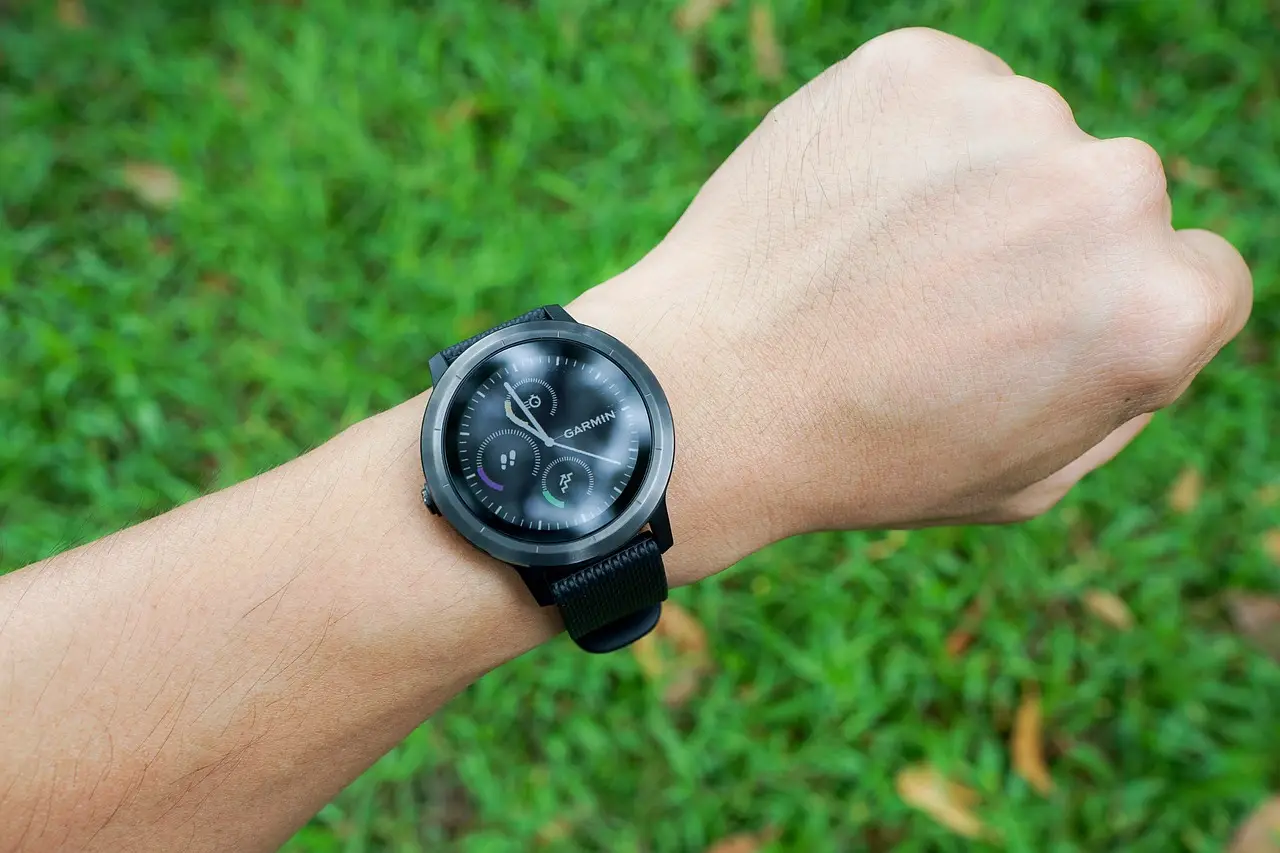
Google researchers have documented a model that estimates five walking metrics from a single Pixel Watch, including three metrics reported separately for the left and right foot. The work appears in a publication titled Smartwatch-Based Walking Metrics Estimation, with a matching patent application, US 2026/0363578 A1. Neither document is a product launch, and Google has not said any Pixel Watch will ship the feature.
The inputs are specific. The model reads three-axis accelerometer data and three-axis gyroscope data, both sampled at 50 Hz, plus the wearer's height. It reads nothing else about the person. No named Google representative has commented on the record, so intent and roadmap remain unknown.
What does the method actually produce?
Google's research lists five outputs. Two describe the walker as a whole; three come in left and right versions:
- Gait speed — one value, how fast the person walks
- Double support time — one value, the period when both feet share ground contact
- Step length — left and right, distance covered by each foot's step
- Swing time — left and right, the period a foot is off the ground
- Stance time — left and right, the period a foot is on the ground
The per-foot pairing is the headline. A persistent gap between left and right values is the kind of asymmetry physical therapists look for after injury. Wrist wearables have until now reported gait mostly as steps and pace, so splitting a stride into halves moves the category closer to what movement labs measure.
How does a watch on the wrist see the feet?
It does not. The watch moves with the arm, and the arm swings in rhythm with the legs. The research bet is that this swing pattern carries enough information to reconstruct foot movement. The accelerometer records acceleration along three axes; the gyroscope records rotation around three axes. Six streams of numbers, 50 times per second, feed the model.
Google calls this estimation, and the word choice is honest. The model infers heel strikes and toe-offs rather than observing them. Accuracy depends on arm movement tracking leg movement. Carrying a bag, pushing a stroller or keeping a hand in a pocket breaks that link, and the sources say nothing about how such cases are handled.
What does the 50 Hz sampling rate change?
Fifty samples per second means one reading every 20 milliseconds. The model sees wrist motion in 20-millisecond slices. Timing metrics such as swing and stance time cannot be resolved more finely than that spacing, so a one-sample timing error equals 20 milliseconds. Whether that is acceptable depends on the metric and on any interpolation the model applies, which the records do not specify.
The modest rate also carries a battery advantage. Sampling at 50 Hz draws less power than rates of several hundred hertz, which matters on a watch expected to last a day. And the sensor requirement is ordinary: accelerometers and gyroscopes already sit in nearly every smartwatch, so the method demands no new hardware.
Why is height the only personal input?
Step length scales with body size, and a taller person covers more ground per step. Without a height anchor, the model would struggle to turn wrist acceleration into distance. With it, length estimates can be calibrated to the wearer. The trade-off: a model that knows only height cannot account for leg-length differences, footwear, or injuries that change stride shape.
Confirmed versus unconfirmed
Everything about the method is documented. Everything about commerce is blank:
- Confirmed: the model, the single on-wrist Pixel Watch, the 50 Hz inputs, the five metrics, the patent application.
- Unconfirmed: commercial availability, target model, price, release date, and any Google statement about shipping the feature.
US 2026/0363578 A1 is an application, not a granted patent. Companies file applications to protect work in progress, to block rivals, and sometimes to cover concepts they never ship. Publication shows what engineers explored, not what product managers approved.
The sources also contain no accuracy figures, error margins or validation cohorts. Any claim of clinical accuracy would outrun the available evidence. Compared with movement labs, foot-mounted sensors or phone-in-pocket tracking, the wrist approach trades direct observation for convenience, and until independent testing compares the two, it remains an estimate rather than a replacement.
Gait is also sensitive data. Walking patterns can hint at injury, age-related change or neurological conditions, and the sources say nothing about storage, processing location or sharing. For now, Pixel Watch owners gain nothing: no update, setting or app in the sources unlocks per-foot metrics.
via shattered.io (Source)
More from Marcus Bennett
Show full bio
News editor covering regulation, policy and their impact on hardware layer of artificial intelligence at Die Signal.
795 articles
Same lot
- Google Unveils Edge AI Chip That Cuts Power Use 40% for Wearables
- Apple's HALO Robot System Hits 91% in 360 Trials on Unitree G1
- XPENG Opens Public ADAS Test Rides at Paris Store, a First for a Chinese Brand
- Tesla Runs 1B-Parameter Diffusion Model In-Car at 36 FPS
- Tesla Robotaxi 24/7: What Is Confirmed and What Is Not