Test report DSG-5468 · Rev E · tested October 14, 2026
Foundries & ManufacturingDevice under test
GlobalFoundries to Build $21B in New York Fabs Under US-Japan Deal
GlobalFoundries will invest $21 billion in new New York fabs under a US-Japan trade deal, adding domestic capacity for specialty chips and automotive buyers.
- Read
- 3 min
- Words
- 647
- Node
- 14nm
- Operator
- Marcus Bennett
Spec summary
- GlobalFoundries plans $21 billion in new fab construction in New York state.
- The investment sits under a US-Japan trade agreement between the two governments.
- The site is the company's existing campus in Malta, north of Albany.
- GlobalFoundries previously received CHIPS Act support for an earlier Malta expansion.
- Phase breakdown, timelines and incentive splits remain undisclosed.
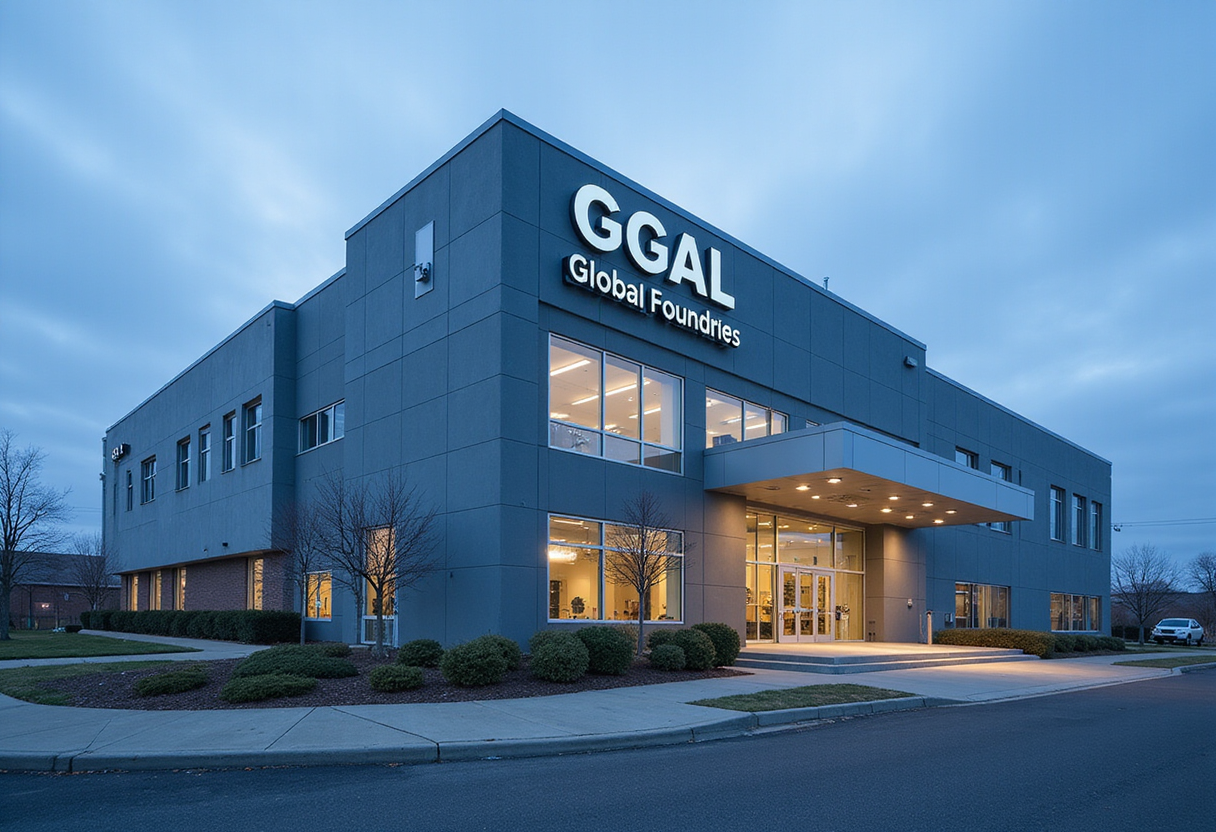
GlobalFoundries will spend $21 billion on new fabrication plants in New York state, the company announced under the framework of a new US-Japan trade agreement. The figure is the headline number. It covers new fab construction at an existing US semiconductor site and ties one of the world's largest contract chipmakers to a bilateral trade deal between Washington and Tokyo.
The announcement links two stories that usually run separately: industrial capacity planning and trade diplomacy. What does this change for the US chip supply chain? In practice, it adds domestic capacity at a foundry that already serves automotive, aerospace and defense customers, and it anchors that capacity in a policy framework rather than pure market demand.
What is being built, and where?
GlobalFoundries operates an existing campus in Malta, New York, roughly 30 kilometers north of Albany. The $21 billion program targets new fabrication capacity at that site, according to the announcement.
The company has not yet published a full construction timeline. What is known:
- Total planned investment: $21 billion.
- Location: New York state, at the company's existing manufacturing site.
- Policy context: the project sits under a US-Japan trade deal concluded between the two governments.
New York state has pursued semiconductor investment for years through its Green CHIPS incentive program. GlobalFoundries previously received federal support under the CHIPS and Science Act for an earlier Malta expansion.
How does the US-Japan trade deal fit in?
The trade agreement between the United States and Japan created the policy opening for this investment. GlobalFoundries' parent ownership traces to Mubadala, the Abu Dhabi sovereign fund, but the company's operational ties span both the US and Asian supply chains, which makes bilateral trade terms directly relevant to its planning.
The deal matters because foundry investment decisions run on decade-long horizons. Tariff schedules, export controls and subsidy terms can shift project economics more than quarterly demand. A company committing $21 billion wants policy stability, and a signed trade agreement provides more of it than a unilateral program alone.
What does this change for customers and competitors?
The practical question for buyers is capacity timing. GlobalFoundries specializes in mature and specialty process nodes rather than cutting-edge lithography. Its customers include automakers and industrial electronics firms that faced severe chip shortages in 2021 and 2022.
More US-based capacity at those nodes means:
- Shorter supply lines for automotive and industrial chips.
- A second large-scale domestic option alongside TSMC's Arizona fabs and Intel's US sites.
- Stronger qualification incentives for defense and aerospace programs that require trusted-fab sourcing.
For competitors, the signal is that US policy continues to pull foundry capital toward American soil. TSMC, Samsung and Intel have all announced multi-billion-dollar US projects in the same policy environment.
The open questions
The announcement leaves several numbers unstated. The company has not broken down the $21 billion by phase, disclosed job creation figures, or confirmed which process technologies the new fabs will run. Construction start dates and production ramps remain unpublished.
State and federal incentives for this specific project also lack detail. New York's Green CHIPS program caps individual awards, and federal CHIPS money for GlobalFoundries has previously gone to a separate expansion phase. How this $21 billion splits between private capital and public support is not yet clear.
Why the number matters anyway
Twenty-one billion dollars places this among the largest single-state semiconductor commitments announced in the US. It confirms a trend rather than starting one: since 2022, announced US semiconductor investment has run well past $200 billion across all major players.
For upstate New York, the project extends a regional cluster that includes the Albany NanoTech Complex and a growing supplier base. For the industry, it shows trade agreements now function as industrial policy instruments, steering fab location decisions that market forces alone once determined.
By Marcus Bennett
via Google News: Semiconductor supply chain (Source)
More from Marcus Bennett
Show full bio
News editor covering regulation, policy and their impact on hardware layer of artificial intelligence at Die Signal.
374 articles
Same lot · LOT-C1CA
- DSG-723714nmUp To $21 Billion U.S.-Japan Plan Puts Two New York Fabs Under GlobalFoundries
- DSG-833914nmGlobalFoundries to Build Two New Malta Chip Fabs in $21B Push
- DSG-58987nmGlobalFoundries picked to run two new fabs in Malta, N.Y.
- DSG-997465nmGlobalFoundries to build two New York fabs under $21bn US-Japan deal
- DSG-875820nmGlobalFoundries Plans New York Fab Worth Up to ¥3.3 Trillion