Test report DSG-5133 · Rev D · tested October 10, 2026
Memory & StorageDevice under test
CXMT Commits 34.9 Billion Yuan to DRAM R&D and Back-End Capacity
ChangXin Memory Technologies will pour 34.9 billion yuan into DRAM R&D and back-end facilities, stepping up its challenge to market leaders Samsung and SK Hynix.
- Read
- 3 min
- Words
- 566
- Node
- 14nm
- Operator
- Grace Kim
Spec summary
- CXMT will invest 34.9 billion yuan (approx. $4.8 billion) in DRAM development and back-end facilities.
- The program targets both R&D and packaging/test capacity.
- The stated goal is to accelerate CXMT's pursuit of DRAM leaders Samsung and SK Hynix.
- The announcement did not disclose a budget split, facility locations or timeline.
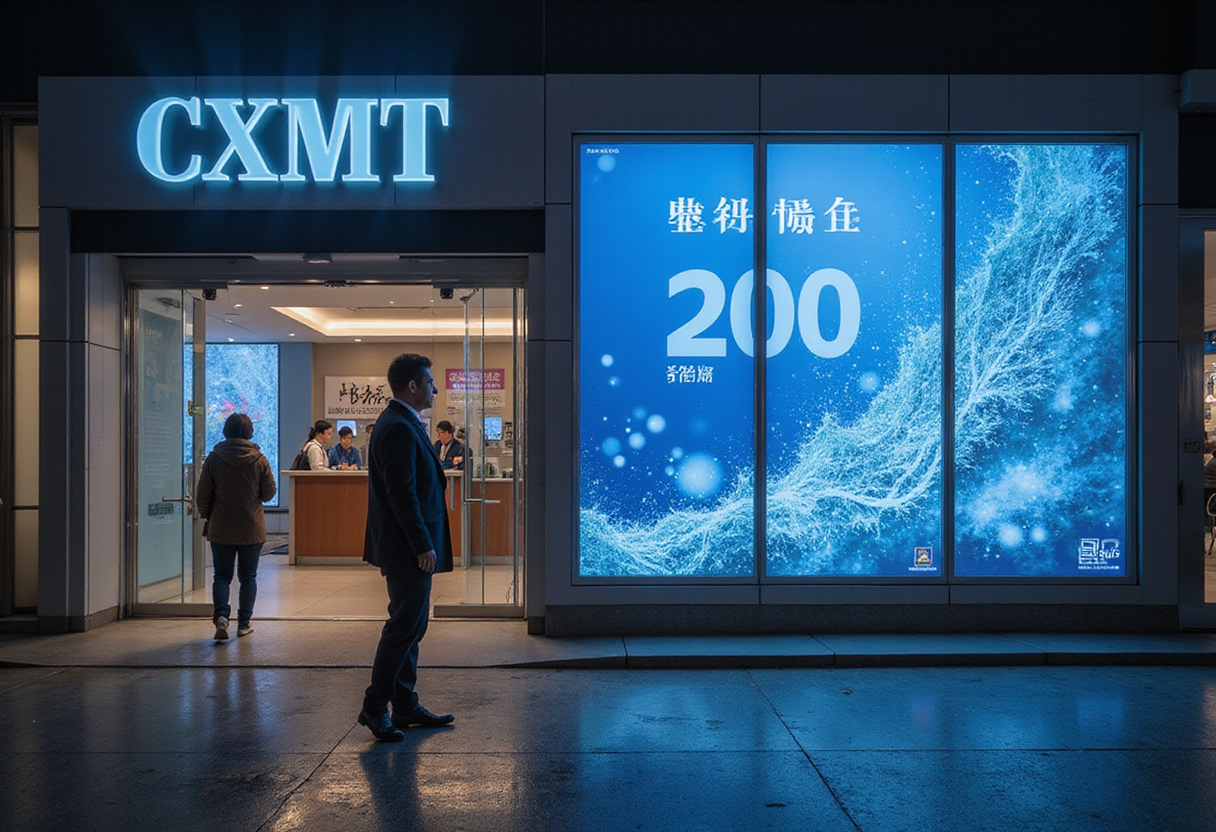
ChangXin Memory Technologies (CXMT) will invest 34.9 billion yuan — roughly $4.8 billion at current exchange rates — in DRAM research and development plus back-end manufacturing facilities, according to the company's announcement. The program signals an accelerated push to catch Samsung Electronics and SK Hynix, the two suppliers that dominate the global DRAM market.
The scale of the commitment matters. CXMT has grown from a niche domestic player into the most credible Chinese challenger in standard DRAM, and a five-year, double-digit-billion-yuan outlay directed at both R&D and packaging or test capacity addresses the two areas where the company trails the Korean incumbents most: process technology and back-end integration.
What does the investment cover?
The 34.9 billion yuan program splits across two pillars:
- DRAM R&D — funding for next-generation memory node development, the portion of the budget aimed at closing the technology gap with Samsung and SK Hynix.
- Back-end facilities — capacity for the packaging, assembly and test stages that convert finished wafers into shippable memory products, historically a bottleneck for Chinese memory makers scaling output.
The announcement did not break out the split between the two lines, name specific facility sites, or attach a construction timeline.
Why is CXMT chasing Samsung and SK Hynix now?
Samsung and SK Hynix together control the large majority of global DRAM revenue, and both continue to pour capital into advanced nodes and high-bandwidth memory for AI systems. For CXMT, the route to relevance runs through sustained, large-scale spending of exactly the kind announced — R&D to reach competitive process generations, and back-end capability to serve customers at volume.
The investment also fits the broader pattern of Chinese semiconductor self-sufficiency programs, where memory remains one of the most capital-intensive and strategically prioritized segments. CXMT is the flagship domestic effort in standard DRAM, and its spending cadence is the clearest public indicator of how quickly Chinese capacity can become a structural factor in global memory supply.
What are the market implications?
For DRAM buyers, the development points to a third large-scale supplier candidate over the medium term. That prospect carries weight in a market where pricing has long hinged on the capital-discipline decisions of two or three incumbents.
For Samsung and SK Hynix, the announcement is a reminder that the competitive frontier in DRAM is no longer purely a Korean duopoly question. A rival willing to commit tens of billions of yuan to R&D and back-end capacity changes the long-term supply calculation, even if CXMT's current process position lags the leaders.
Key open questions the announcement leaves unanswered:
- How the 34.9 billion yuan divides between R&D and back-end construction
- Which process node the R&D funding targets
- The geographic location of the new back-end facilities
- The schedule for capacity coming online
What comes next?
Watch for follow-on disclosures on facility siting, equipment orders and node milestones. Back-end buildouts typically surface first through tool supplier filings and local government approvals in China, and those channels will likely reveal the program's timeline before CXMT publishes a detailed breakdown.
The 34.9 billion yuan figure sets the benchmark against which CXMT's execution will now be measured — and against which Samsung and SK Hynix will calibrate their own responses in the memory market's next investment cycle.
via Google News: DRAM chip (Source)
More from Grace Kim
Same lot · LOT-C1C6
- DSG-285745nmCXMT Commits 34.9 Billion Yuan to DRAM R&D and Testing
- DSG-622514nmCXMT Puts New Memory-Chip Platform Into Mass Production
- DSG-42853nmCXMT Plans NAND Flash Entry as Global Shortage Reshapes Market
- DSG-62293nmCXMT begins mass production of new memory-chip platform
- DSG-752245nmCXMT Pushes China's DRAM Into Fifth-Generation Technology