Test report DSG-8018 · Rev A · tested October 14, 2026
AI Datacenter InfrastructureDevice under test
Cisco and Nvidia Team Up on Fatter, Faster Pluggable Optics
Cisco and Nvidia are co-developing faster pluggable optics for AI clusters — a move that trims interop risk for anyone running Cisco switching under Nvidia compute.
- Read
- 3 min
- Words
- 603
- Node
- 7nm
- Operator
- Elena Vasquez
Spec summary
- Cisco and Nvidia have announced a partnership to develop faster pluggable optics
- The partnership targets the transceiver layer connecting switches and GPUs in AI clusters
- The Register broke the news; no speed class, form factor, or shipping date has been disclosed
- The move reduces interoperability risk for enterprises running Cisco switching with Nvidia compute
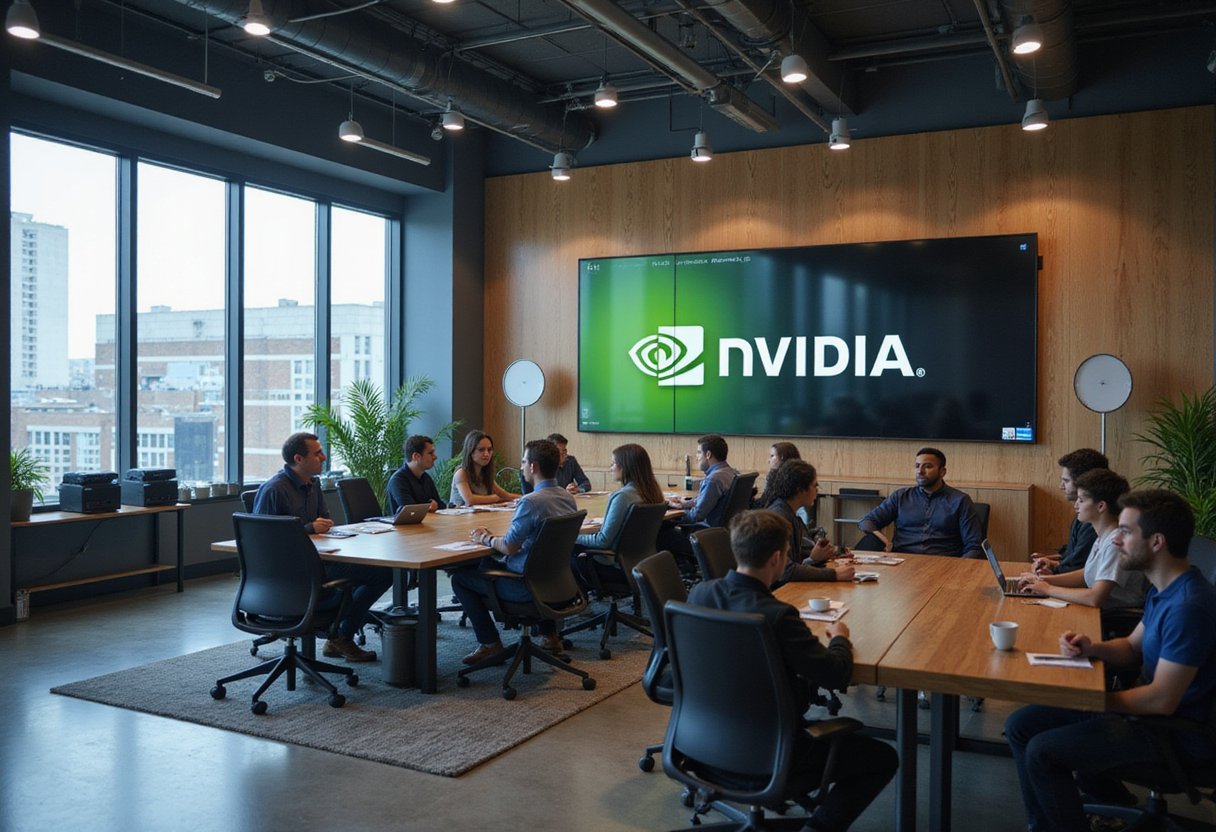
Cisco and Nvidia are working together on a new generation of pluggable optics — the swappable transceiver modules that connect switches and GPUs inside data center clusters, The Register reports.
That's the whole headline, but it carries real weight if you run network gear for a living. The pluggable is the component your budget feels first when link speeds jump, and it's the part vendors fight over hardest. When the two companies that respectively dominate switching silicon and AI accelerators co-develop one, the ripple lands on your roadmap, not just theirs.
Why does a pluggable partnership matter?
Every speed transition — 400G to 800G, and the 1.6T generation now in flight — forces a renegotiation between three parties: the switch vendor, the accelerator vendor, and the optics supply chain. AI clusters made that negotiation brutally concrete. Back-end fabrics for GPU pods push transceiver counts far past what classic three-tier data center networks ever demanded, and each generation of accelerators pulls more bandwidth per port than the optics ecosystem comfortably delivers at volume.
A pluggable that both Cisco and Nvidia have signed off on removes a chunk of the qualification risk. If you're building mixed estates — Cisco switching feeding Nvidia compute, which describes a lot of enterprise AI deployments right now — a jointly developed module means one interoperability story instead of two vendors pointing at each other when links flap.
What changes for buyers?
The Register's report is thin on shipping dates and port counts, so treat the following as what to watch rather than what's confirmed:
- Qualification burden. A co-developed pluggable shortens the interop test matrix for anyone running Cisco-to-Nvidia links. That's engineering hours saved.
- **Supply signal." Optics shortages have bitten every AI buildout; two anchor customers co-developing a part tends to pull capacity into the supply chain ahead of launch.
- Roadmap risk. If the module targets the 1.6T class, expect pressure on 800G pricing as the industry pivots — useful leverage if your refresh lands mid-transition.
The competitive read
Partnerships like this one are also a boundary drawing exercise. Nvidia's networking arm has its own silicon and optics agenda from the Mellanox lineage; Cisco sells its own optics alongside its Silicon One switches. Co-developing a pluggable means both sides accepted that no single vendor wraps the whole AI fabric anymore — the interconnect layer is where they've chosen to cooperate rather than duplicate.
For competitors in the optics and switching markets, that's an uncomfortable signal. A Cisco-Nvidia reference module tends to become the default that everyone else's parts get benchmarked against, simply because it sits under the two biggest installed bases in enterprise AI networking.
What we don't know yet
The Register's piece doesn't pin down the speed class, the form factor, or availability. Until Cisco or Nvidia publish specs, the practical questions for planners are simple: which switch generations will host it, whether it lands in the front-end (switch-to-switch) or back-end (GPU-to-GPU) fabric, and whether it's a Cisco SKO or a genuinely shared product line.
Watch Cisco's networking announcements and Nvidia's GTC-adjacent releases for the spec sheet. When it arrives, the numbers to check first are power per port — the figure that decides whether your chassis and cooling budget survive the next density step — and reach at the advertised rate, which determines whether you're buying DR-class or FR-class variants.
We'll update as the technical details land.
Elena Vasquez covers networking and data center infrastructure for Die Signal.
via Google News: GPU datacenter (Source)
More from Elena Vasquez
Show full bio
Senior reporter covering people, launches and day-to-day practice in hardware layer of artificial intelligence at Die Signal.
347 articles
Same lot · LOT-C1CA
- DSG-60123nmNvidia Takes the Lead in Data Center Ethernet Switching, IDC Finds
- DSG-15747nmNvidia-backed Upscale AI launches platform to link rival chips
- DSG-58583nmMorgan Stanley: AI power crunch strains chip supply chain
- DSG-404920nmMorgan Stanley: Nvidia and Broadcom shielded from AI power crunch
- DSG-34013nmNVIDIA and Coherent Partner on Optics for Next-Gen Data Centers