Test report DSG-5880 · Rev E · tested November 13, 2026
Supply Chain & PolicyDevice under test
ASML Korea Union Demands Bargaining With Samsung, Not Its Own Boss
The 1,300-member ASML Korea union has demanded direct bargaining with Samsung Electronics under the Yellow Envelope Act, arguing the chipmaker is the de facto employer of its on-site staff.
- Read
- 3 min
- Words
- 613
- Node
- 14nm
- Operator
- Grace Kim
Spec summary
- The ASML Korea union, about 1,300 members strong and founded in 2021, demanded bargaining with Samsung Electronics on the 13th.
- The demand relies on the revised Labor Union Act (Yellow Envelope Act), which extends bargaining duties to prime contractors with substantive control over working conditions.
- The agenda covers safety and conditions — two-person teams for high-risk work, expanded rest areas, joint harassment probes — but excludes wages.
- The union will file for corrective action with the Labor Relations Commission if Samsung skips required procedures within seven days.
- ASML Korea asked ASML's Dutch headquarters for talks last month and received no response.
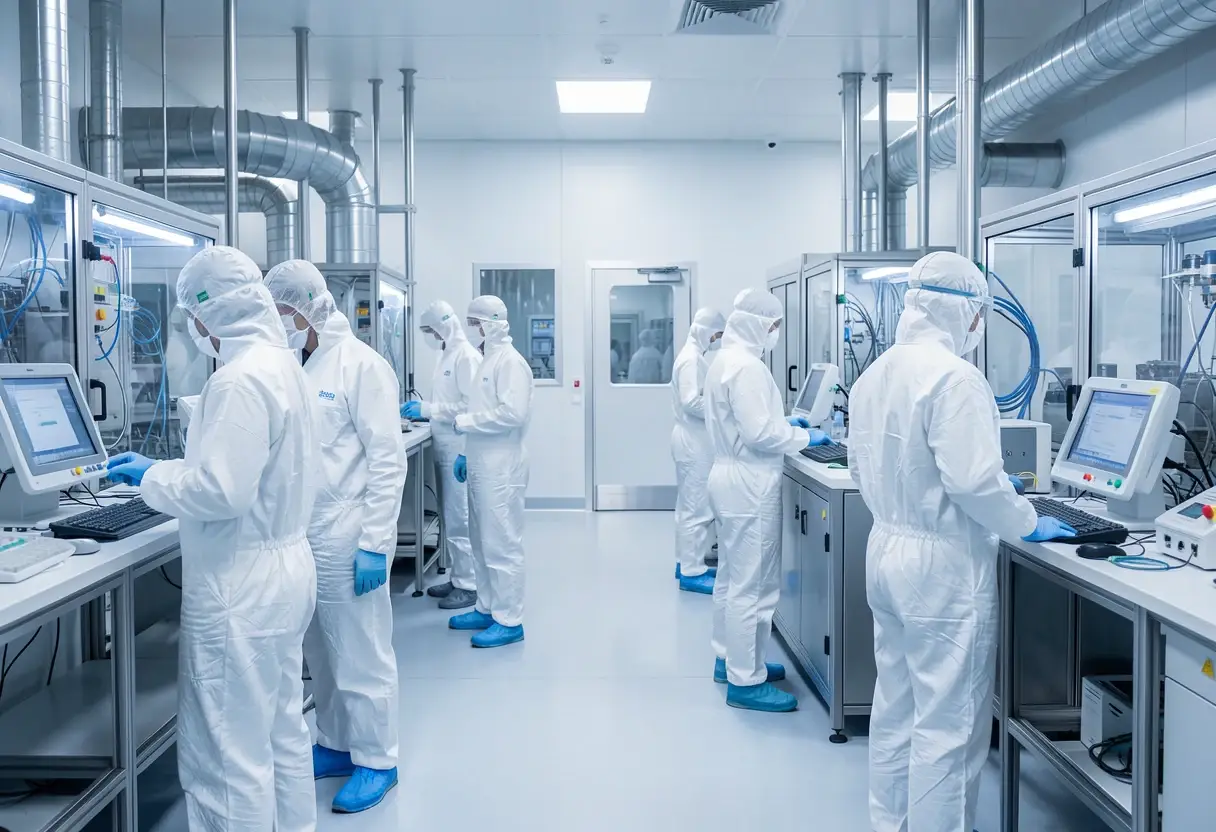
A 1,300-member union at ASML's Korean unit has demanded direct bargaining with Samsung Electronics, naming its client company — not its own management — as the negotiating counterpart. It's the first such demand aimed at a foreign chip equipment supplier under Korea's revised Labor Union Act, and it landed on Samsung's desk on the 13th.
The Korean Chemical, Textile and Food Industry Workers' Union, affiliated with the Korean Confederation of Trade Unions, sent Samsung Electronics a letter requesting "prime contractor-subcontractor bargaining to improve workplace safety and working conditions." The ASML Korea branch, established in 2021, will join the talks jointly with its umbrella organization.
ASML is the industry's so-called "super supplier" — the sole provider of extreme ultraviolet (EUV) lithography systems, the machines without which advanced chips cannot be made. That gives the Dutch company formidable leverage over global chipmakers. Its Korean employees, though, spend their working lives largely inside Samsung's plants.
Why target the client?
The union's argument is structural. ASML's Korean unit does not manufacture equipment domestically. Many of its employees enter or are stationed at Samsung Electronics sites, where they handle equipment installation and maintenance.
Samsung sets work schedules and cleanroom (particle-controlled production environment) safety standards for those workers, the union says. That makes the chipmaker the de facto employer — regardless of whose name is on the pay slip.
Yoon Chun-ho, head of the ASML Korea branch, said the union had asked the company for improvements several times without result. Samsung Electronics, which holds the substantive decision-making power, should come to the table, he said.
The union also tried another channel first. It requested talks with ASML's Dutch headquarters last month. It received no response.
What does the law change?
The legal foundation is the revised Labor Union Act, widely known as the Yellow Envelope Act. It extends bargaining obligations to prime contractors that exercise substantive influence over working conditions at their subcontractors. Employer status is now judged by whether a party holds substantive control and decision-making power over those conditions.
Under the old rules, naming a client company with no direct employment relationship as a bargaining counterpart was difficult. The amendment widened that scope. Demands for contractor-level bargaining are now spreading to foreign equipment suppliers, not just domestic contractors.
ASML Korea is the test case with real teeth. If a union can force a foreign monopoly supplier's client to the table, other foreign vendors' Korean workforces — and their chipmaker customers — will take note.
What's on the agenda?
The bargaining scope excludes wages and performance pay. It covers workplace safety and working conditions, with three specific demands:
- Mandatory two-person teams for high-risk work;
- Expanded rest areas;
- Joint participation in investigations of abuse-of-power or sexual harassment cases involving the prime contractor.
These are operational demands aimed directly at site-level conditions inside Samsung facilities, where ASML staff actually work.
What happens if Samsung doesn't respond?
The clock is short. The chemical and food workers' union plans to file for corrective action with the Labor Relations Commission if Samsung Electronics fails to carry out required procedures within seven days. Those procedures include publicly posting notice of the bargaining demand.
Seven days, then a formal labor dispute filing. Samsung has not publicly responded to the letter.
For Samsung, the stakes extend past this one case. Accepting bargaining obligations toward a supplier's union would set a precedent across its vast contractor network. Refusing risks a legal showdown over how far the Yellow Envelope Act reaches into global supply chains — with ASML, the one supplier it cannot replace, sitting in the middle.
via en.sedaily.com (Source)
More from Grace Kim
Show full bio
Market editor covering regulation, policy and their impact on hardware layer of artificial intelligence at Die Signal.
566 articles
Same lot · LOT-3629
- DSG-79563nmSamsung Projects Foundry Customer Base to Quadruple by 2029
- DSG-38357nmLG Electronics Awards AI Home Chip Production to Samsung Foundry
- DSG-117945nmASML Shares Fall on China Restrictions Despite Strong Results
- DSG-365245nmSamsung Affiliates Commit USD 9.15 Billion to Semiconductor Buildout
- DSG-26535nmSamsung Electro-Mechanics Wins 360.5 Billion Won Chip Substrate Order