Test report · tested November 22, 2026
Processors & AcceleratorsDevice under test
Apple M7 Rumor: 240 GB/s and 1.5 TB Claims, Zero Confirmations
Reports dated November 20, 2026 point to an AI-focused Apple M7 chip family for 2027 Macs with 240 GB/s bandwidth and 1.5 TB memory claims — all unconfirmed.
- Read
- 4 min
- Words
- 872
- Segment
- Processors & Accelerators
- Operator
- Marcus Bennett
Spec summary
- Reports from November 20, 2026 say Apple prepares M7 silicon for 2027 Macs; Apple has confirmed nothing
- Rumored base M7 bandwidth is about 240 GB/s, roughly 20% above a reported 200 GB/s for M6
- Tom's Hardware reports the M7 Ultra could carry up to 1.5 TB of unified memory, shipping in 2028
- Apple shipped real M6 and M5 Ultra chips in August 2026; M7 Pro and Max are rumored for late 2027
- Gartner forecast AI PCs at 31% of the market (77.8M units) by end of 2025
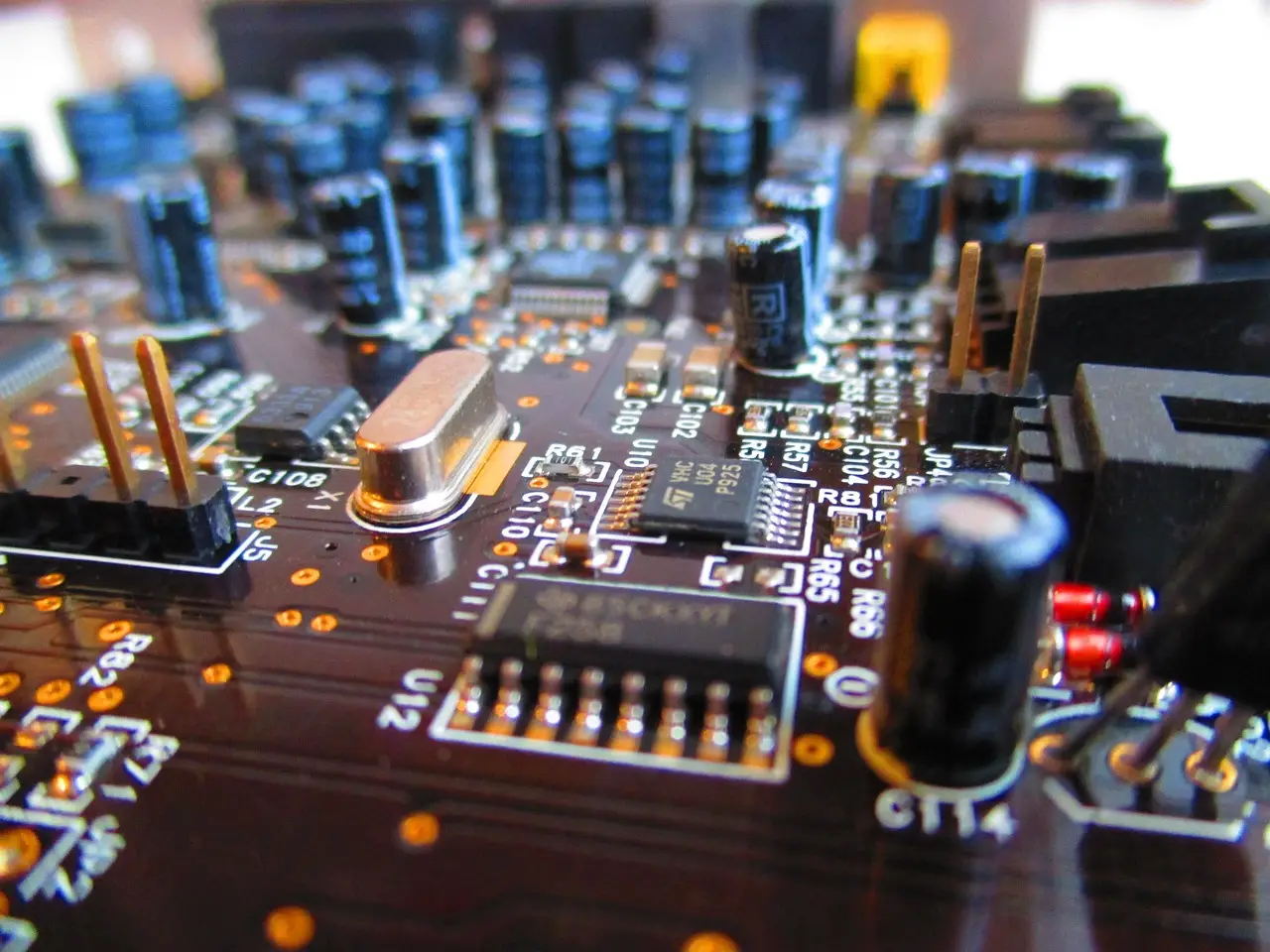
Industry reports summarized by MacDailyNews on November 20, 2026 say Apple is preparing M7 silicon for its 2027 Mac lineup with AI acceleration as the priority. Apple has confirmed nothing. No announcement, no names, no dates. As of November 21, 2026, the M7 is a credible rumor, not a product.
The claims cluster around three technical themes. A faster Neural Engine, the block that runs machine-learning workloads. Higher unified-memory bandwidth, which governs how fast model weights reach compute units. And a four-part family: M7, M7 Pro, M7 Max and M7 Ultra.
What does the reporting actually say?
The most quoted figure is roughly 240 GB/s of unified-memory bandwidth for the base M7, cited in secondary reporting. One report frames it as a step up from 200 GB/s for the M6 and 153 GB/s for the M5. Those comparison numbers are themselves labeled unvalidated. If the rumor holds, the implied M6-to-M7 gain is 20 percent — arithmetic on reported figures, not an Apple claim. No bandwidth number exists for the M7 Pro or M7 Max.
Tom's Hardware tied the rumored M7 Ultra to up to 1.5 TB of unified memory and "Blackwell-class" AI performance. BigGo Finance carried the same 1.5 TB rumor for 2027. Both claims are unconfirmed, and the Nvidia comparison deserves extra suspicion: hosting a large model in shared memory is not the same as matching a data center GPU's throughput.
Timing details come largely from reporting attributed to Mark Gurman:
- Entry-level MacBook Pro with M7 sometime in 2027
- M7 Pro and M7 Max MacBook Pro "at the end of next year" — late 2027
- M7 Ultra in 2028
A verification pass found no Apple specification, price, launch date or executive statement for any M7 part. That concentration matters. Several rows of the rumor ledger trace back to the same underlying source, Gurman. Five outlets repeating one reporter's roadmap is one data point amplified, not five confirmations.
The wider product picture is equally fuzzy. MacRumors published a roundup headlined "18 new Apple products next year" on November 16, 2026. 9to5Mac the same day counted "15 or more new products coming in 2027." The two counts differ, which tells you how soft the underlying leaks are.
What does Apple actually ship?
Apple's newsroom announced M6 and M5 Ultra chips in August 2026, with M6 debuting in a new Mac mini and M5 Ultra in a new Mac Studio. Those parts are real and on sale. The M7 family is not.
TechRepublic reported that Apple overhauls its chip roadmap and ditches M6 Pro and M6 Max for the M7 generation. If accurate, Apple skips a step and moves higher-end Mac chips straight to M7. That logic is plausible given the mixed current lineup — M6 at the low end, M5 Ultra at the top — but chip roadmaps shift for reasons outsiders rarely see: process yields, packaging capacity, software readiness.
Why the Neural Engine leads the story
The Neural Engine is a dedicated accelerator for matrix math, and reports describe it as the main M7 target, raising throughput for Apple Intelligence and local inference. There is a catch. Large language models often run on the GPU or a mix of units, and software support decides how much silicon gets used. Developers will want to see how Apple exposes the Neural Engine before trusting any TOPS figure.
Market forecasts explain the push. Gartner projected AI PCs would reach 31 percent of the worldwide PC market by the end of 2025, equal to 77.8 million units. Canalys forecast AI-capable PCs passing 100 million shipments in 2025, or 40 percent of all PC shipments. An Omdia analysis of Canalys data says 60 percent of AI-capable PCs shipped in 2027 will go to businesses — a hint that private, on-device inference could win corporate buyers.
Memory costs cut the other way. RAM contract prices are seen rising 13 to 18 percent in Q4 2026, and TrendForce data shows HBM taking 23 percent of DRAM wafers, nearing 30 percent by 2027. A 1.5 TB configuration would need a large allocation of scarce parts, which makes that rumor harder to believe at consumer prices.
On price, a Mac Studio M5 Ultra carried $5,499 against a $2,599 Nvidia RTX Spark configuration. An M7 would sharpen Apple's local-AI argument; it would not erase that gap.
What should buyers do?
What does this change for anyone shopping now? Nothing. Apple's M6 and M5 Ultra hardware is real, supported and reviewed. A rumored 2027 chip should not freeze a needed purchase. For local-AI workloads, check memory capacity and bandwidth first — those two numbers set the ceiling for model size and speed. Then verify whether your tools use the Neural Engine or the GPU.
Confirmation signals to watch: an Apple press release or keynote, regulatory filings for new Mac models, supply-chain reports, and developer betas referencing unreleased hardware identifiers. Counter-signals matter too — a fresh report of restored M6 Pro and Max, or worsening memory shortages through early 2027.
The practical rule: believe the direction, doubt the specifications, and wait for Apple's own newsroom to settle the details.
via shattered.io (Source)
More from Marcus Bennett
Show full bio
News editor covering regulation, policy and their impact on hardware layer of artificial intelligence at Die Signal.
752 articles