Test report DSG-8131 · Rev D · tested November 17, 2026
Processors & AcceleratorsDevice under test
AMD Lands 12,643 Lines of GFX13 Kernel Code for Unannounced GPU
AMD's November 9, 2026 eight-patch AMDGPU series adds 12,643 lines introducing GFX13, naming GFX 13.0.1 and GFX 13.0.4 targets for unannounced hardware with no specs or dates.
- Read
- 4 min
- Words
- 891
- Node
- 45nm
- Operator
- Grace Kim
Spec summary
- On November 9, 2026, Alex Deucher submitted 8 AMDGPU patches adding 12,643 lines across 32 files
- The series introduces GFX13 with two IP targets: GFX 13.0.1 and GFX 13.0.4
- Three new blocks arrive: the GFX13 graphics engine, Micro Engine Scheduler, and Integrated Management Unit
- No product name, specs, price, or launch date appears; the RDNA 5 link and Linux 7.5 merge remain unconfirmed
- Rumors point to a mid-range RDNA 5 GPU in 2027, with possible 2028 slips for broader lineups
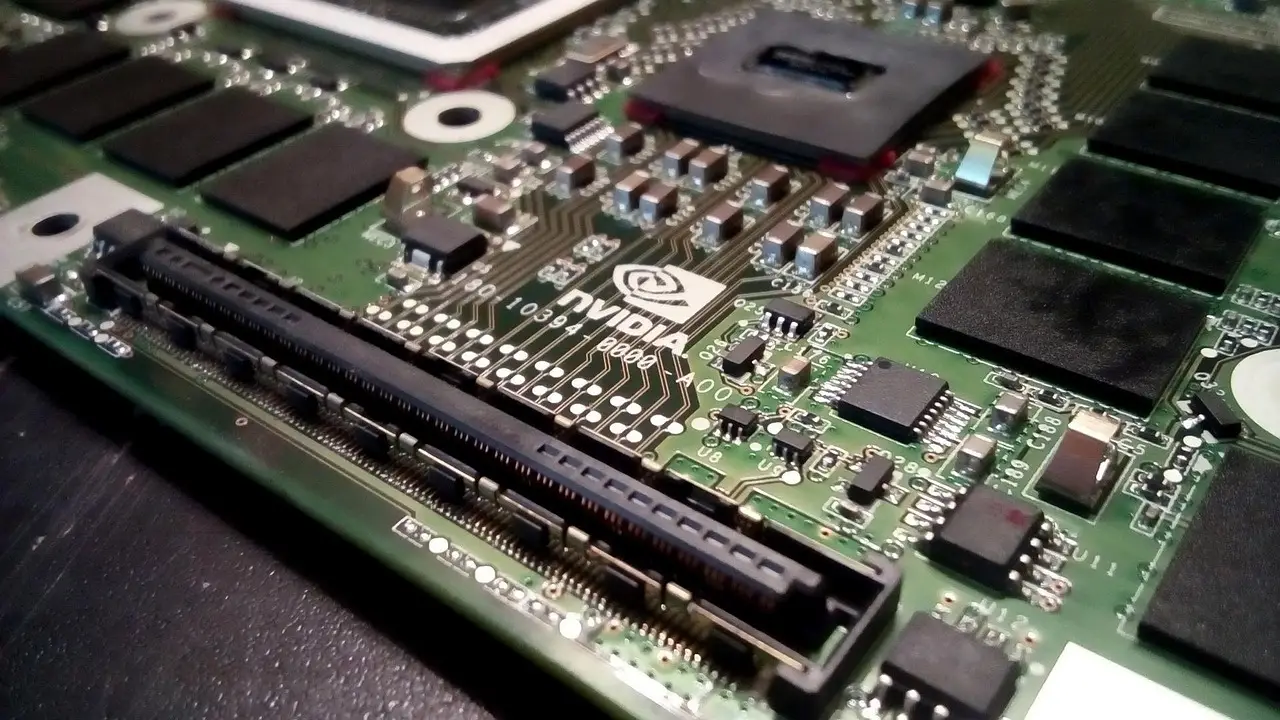
Eight patches and 12,643 added lines of code landed in AMD's open-source AMDGPU Linux kernel driver on November 9, 2026, introducing a graphics architecture AMD has not announced. AMDGPU maintainer Alex Deucher submitted the series, which carries the GFX13 identifier — the most concrete public sign yet that AMD's next graphics core has moved from compiler experiments into real kernel work.
The numbers are exact. Wccftech, crediting Phoronix with spotting the series first, reports 12,643 lines added, 15 removed, and 32 files touched. Net change: 12,628 lines. That averages roughly 395 added lines per file and about 1,580 lines per patch. The added-to-removed ratio runs close to 843 to one. Refactoring produces a different mix. This is almost entirely new code for hardware the driver does not yet know.
Within a day, TweakTown, Guru3D, TechPowerUp and PC Gamer had all written the series up. PC Gamer framed it as support for AMD's next-gen GPUs getting patched into Linux.
What's inside the series?
Three major pieces arrive: the GFX13 graphics engine, the Micro Engine Scheduler (MES, which handles how work queues reach the graphics hardware), and the Integrated Management Unit (IMU, which takes part in bringing the graphics core up). GFX numbers, in AMD's naming, identify the graphics and compute core the driver must program; support for one generation does not carry to the next without new code.
Wccftech also reports the patches reach AMD's Kernel Fusion Driver components, which handle GPU compute workloads — so the enablement isn't limited to gaming paths. One telling detail: a patch explicitly disables per-queue reset (recovering individual stuck queues) for the GFX13 topology because the MES implementation isn't ready. That's a normal marker of early bring-up code.
The series also documents GFX13 compute-wave save-and-restore trap-handler support — letting hardware pause running compute work and resume later, which schedulers need for preemption — and enables several graphics clock-gating mechanisms. Guru3D sees the clock gating, which turns off or reduces activity in idle parts of the engine, as a sign driver authors are thinking about power management alongside device recognition.
Two targets, but no roadmap
The patches name two IP targets: GFX 13.0.1 and GFX 13.0.4. Wccftech reads them as a sign AMD is preparing more than one hardware configuration, with a caution — they don't necessarily map to two retail GPUs. Guru3D is blunter: the code doesn't say whether they're distinct consumer GPUs, data-center parts, or configurations of one design. They're evidence of multiple IP targets in development, not a product roadmap.
What's absent matters just as much. No retail product name, final GPU configuration, specification sheet, price, or launch date appears. There are no compute unit or workgroup processor counts, no clock speeds, no memory configurations, no performance figures. Guru3D spells out the consequence: this isn't a driver anyone can install to gain support for a new card. It's engineering code under review. TweakTown adds the patches disclose no new features yet; more functionality could arrive in later patches.
Is GFX13 really RDNA 5?
Most coverage links GFX13 to RDNA 5. The link is plausible and unconfirmed. TweakTown calls GFX13 AMD's next-gen RDNA 5 architecture in its lead, then qualifies elsewhere: the references are most likely about RDNA 5, the expected name for AMD's next gaming architecture. Its reasoning rests on precedent — earlier GFX12 patches ended up serving RDNA 4 GPUs like the Radeon RX 9070 XT.
Wccftech states it plainly: AMD has yet to officially confirm GFX13 will be marketed as RDNA 5, much less announce a launch date. The distinction matters because GFX identifiers cover more than gaming cards; data-center or workstation parts would use the same kernel code.
Kernel 7.5: possible, not promised
Wccftech, citing Phoronix, says the patches could potentially reach Linux kernel 7.5; inclusion isn't confirmed. TweakTown goes further, reporting the expectation that Linux 7.5 will formally add GFX13 support in early 2027. Both are projections. A submission can be revised, rejected, or delayed, and Guru3D expects more revisions before maintainers decide. Even after a merge, Mesa, firmware, and distribution packaging still have to line up.
What does this change for buyers?
Almost nothing. AMD's current lineup remains the Radeon RX 9000 series, competing against Nvidia's RTX 50 series. The patches shape expectations — a visible pipeline tells partners AMD intends to keep competing — but move no market share. TweakTown reports rumors of at least one mid-range RDNA 5 GPU in 2027, with possible slips to 2028 for next-gen Radeon RX 10000 and RTX 60 Series cards; neither claim is confirmed, and the RX 10000 name appears only in rumor context. TweakTown also warns component pricing and scarcity may continue through 2027. A mid-range RDNA 5 card could be significant, TweakTown suggests — but only if generational rasterization and ray tracing gains are notable. No patch states performance.
The series didn't appear in isolation: Wccftech's recap lists GFX13 compiler support, display-engine work, and GDDR7-related kernel patches earlier in 2026. Software readiness, as Guru3D notes, and silicon readiness are different milestones. The takeaway: real, large, and early — with everything that matters to consumers still undecided.
via shattered.io (Source)
More from Grace Kim
Show full bio
Market editor covering regulation, policy and their impact on hardware layer of artificial intelligence at Die Signal.
665 articles
Same lot · LOT-362D
- DSG-506165nmAMD Submits Linux Kernel Patches for Next-Gen AIE4 NPU
- DSG-503810nmOlympic Ridge Reportedly Drops iGPU for Dedicated NPU
- DSG-334345nmAMD Queues More AIE4 NPU Code for Linux 7.2 AMDXDNA Driver
- DSG-841210nmAMD Uses CES 2026 to Unveil AI PC Chips, Next-Gen Data Center Silicon
- DSG-705610nmAMD Zen 6 'Olympic Ridge' Ryzen to cut iGPU silicon, add on-die NPU