Test report DSG-3582 · Rev C · tested October 10, 2026
AI Datacenter InfrastructureDevice under test
Amazon Seeks to Move $8 Billion in Nvidia Chips Off Its Books
Amazon is working to shift roughly $8 billion in Nvidia graphics processing units off its corporate books. The reported deal highlights how hyperscalers may be reassessing how they fund AI infrastructure.
- Read
- 3 min
- Words
- 633
- Node
- 20nm
- Operator
- Amara Osei
Spec summary
- Amazon is working to shift roughly $8 billion worth of Nvidia GPUs off its corporate balance sheet, per a Yahoo Finance report.
- The transaction's structure — sale-leaseback, SPV, or third-party sale — has not been publicly disclosed.
- The three largest U.S. hyperscalers — Amazon, Microsoft, and Google — have guided capital expenditure sharply higher in recent quarters to fund AI buildouts.
- Counterparty identity, lease tenor, residual-value assumptions, and accounting treatment all remain undisclosed.
- Analysts expect comparable financing moves from Microsoft and Google in subsequent quarters if the Amazon deal signals a wider shift.
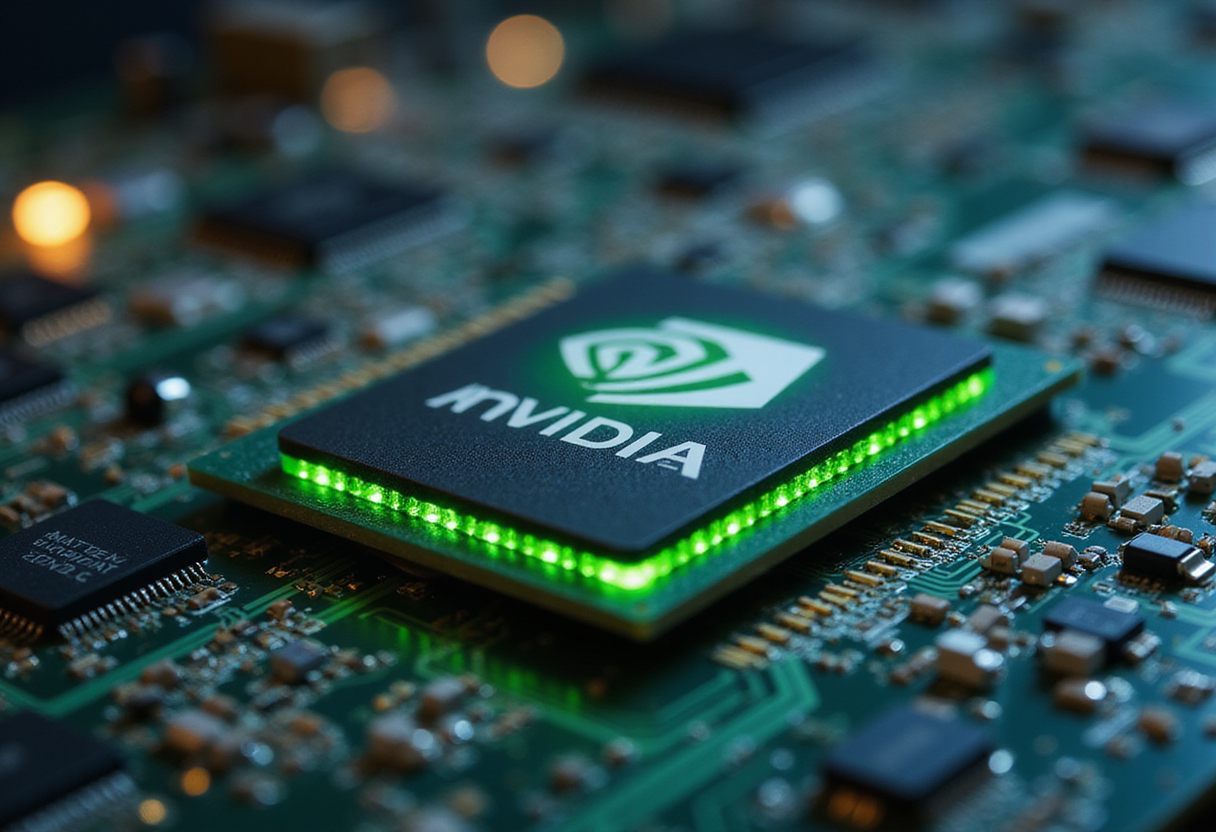
Amazon is working to shift roughly $8 billion worth of Nvidia graphics processing units off its corporate balance sheet, according to a Yahoo Finance report, in a transaction that raises fresh questions about how the industry's largest cloud providers fund the build-out of artificial intelligence infrastructure.
The figure points to a sizeable offloading of AI-relevant silicon from one of the three U.S. hyperscalers most exposed to the generative-AI capex cycle. The arrangement would let Amazon retain operational use of the chips while transferring the underlying hardware cost to another financial counterparty.
What does "off the books" actually mean here?
In equipment-financing parlance, moving assets off the books refers to sale-and-leaseback structures, special-purpose vehicles, or third-party financing arrangements in which the economic owner of an asset differs from the entity reporting it on a financial statement. For a hyperscaler sitting on hundreds of thousands of accelerators, the accounting choice shapes depreciation schedules, reported capex, and operating margin.
The exact mechanism Amazon is pursuing has not been disclosed publicly. Yahoo Finance's headline does not specify whether the deal involves a sale-leaseback, a debt-financed vehicle, or a sale to a leasing specialist.
Why would Amazon reduce its on-paper exposure to Nvidia chips?
GPU depreciation runs over multiple years under standard schedules, leaving the operator carrying non-cash charges that depress operating income even as utilization remains high. Offloading that depreciation onto a leasing counterparty can lift reported operating margin in the near term, even when the underlying cash flows are unchanged.
Three factors typically motivate such moves:
- Capital efficiency. Capital tied up in depreciating GPU stock weighs on near-term free cash flow, a metric under increasing scrutiny from equity investors.
- Debt capacity. Off-balance-sheet structures preserve borrowing room for other investments, including data-center shells and networking gear.
- Refresh cycles. Selling financed silicon to a third party can shorten the path to newer Nvidia generations without holding older inventory on the books.
Does this signal a wider shift in AI financing?
The report frames the transaction as evidence that the AI capex model is "starting to change." That framing carries weight because the three largest U.S. cloud providers — Amazon, Microsoft, and Google — have guided capital expenditure sharply higher over recent quarters, with the bulk earmarked for AI servers, GPUs, and data-center construction.
Equity analysts have widely noted that combination as a structural pressure point: capex has climbed faster than the operating cash flow needed to absorb it. If a meaningful share of that hardware migrates to non-balance-sheet vehicles, reported capex across the sector would understate the true scale of AI infrastructure spending. Leasing firms, private-credit funds, and structured-finance desks have courted this market in recent quarters as hyperscalers look for ways to manage depreciation drag and preserve credit capacity.
What remains unclear
Several questions will determine whether the Amazon deal is an outlier or a template:
- Counterparty identity. The buyer of the $8 billion in Nvidia silicon has not been named.
- Tenor and structure. Lease duration, residual-value assumptions, and any buy-back clauses will define the economics.
- Accounting treatment. Whether the chips come off Amazon's balance sheet under U.S. GAAP or remain consolidated through a variable-interest entity will shape the reported numbers.
- Nvidia's role. The chipmaker sometimes participates in financing arrangements with its largest customers, though no such involvement has been confirmed publicly in this case.
Until those details surface, the $8 billion figure functions more as a market signal than as a fully disclosed transaction. Analysts tracking AI infrastructure will watch for comparable moves by Microsoft and Google in subsequent quarters, since all three hyperscalers face similar pressure on free cash flow as GPU orders continue to scale.
via Google News: AI chip (Source)
More from Amara Osei
Same lot · LOT-C1C6
- DSG-71737nmAmazon Seeks to Offload $8 Billion in Nvidia AI Chips
- DSG-270128nmAmazon Weighs $8 Billion Nvidia Chip Sale to Investors
- DSG-381914nmAmazon Seeks to Offload $8bn of Nvidia Chips to Investors
- DSG-269220nmAmazon Raises AI Chip Rental Prices, Weighs Nvidia Leaseback
- DSG-195628nmAmazon Reported to Sell $8B in AI Chips and Lease Them Back