Test report · tested November 25, 2026
Processors & AcceleratorsDevice under test
Amazon Buys Decart AI Chip Software; $7.5B Price Stays Unconfirmed
Amazon signed for Decart's DOS chip-optimization software on November 23, 2026, with three co-founders joining. The $7.5 billion price is reported only; Amazon disclosed no figure.
- Read
- 8 min
- Words
- 1,500
- Segment
- Processors & Accelerators
- Operator
- Priya Raman
Spec summary
- Amazon announced the Decart Optimization Stack technology purchase on November 23, 2026.
- The $7.5 billion price is attributed to Bloomberg and unconfirmed by Amazon.
- Reuters, citing PitchBook, put Decart's prior valuation at nearly $4 billion.
- Co-founders Dean Leitersdorf, Moshe Shalev and Orian Leitersdorf join Amazon.
- Decart reportedly worked with Amazon on Trainium performance since 2025.
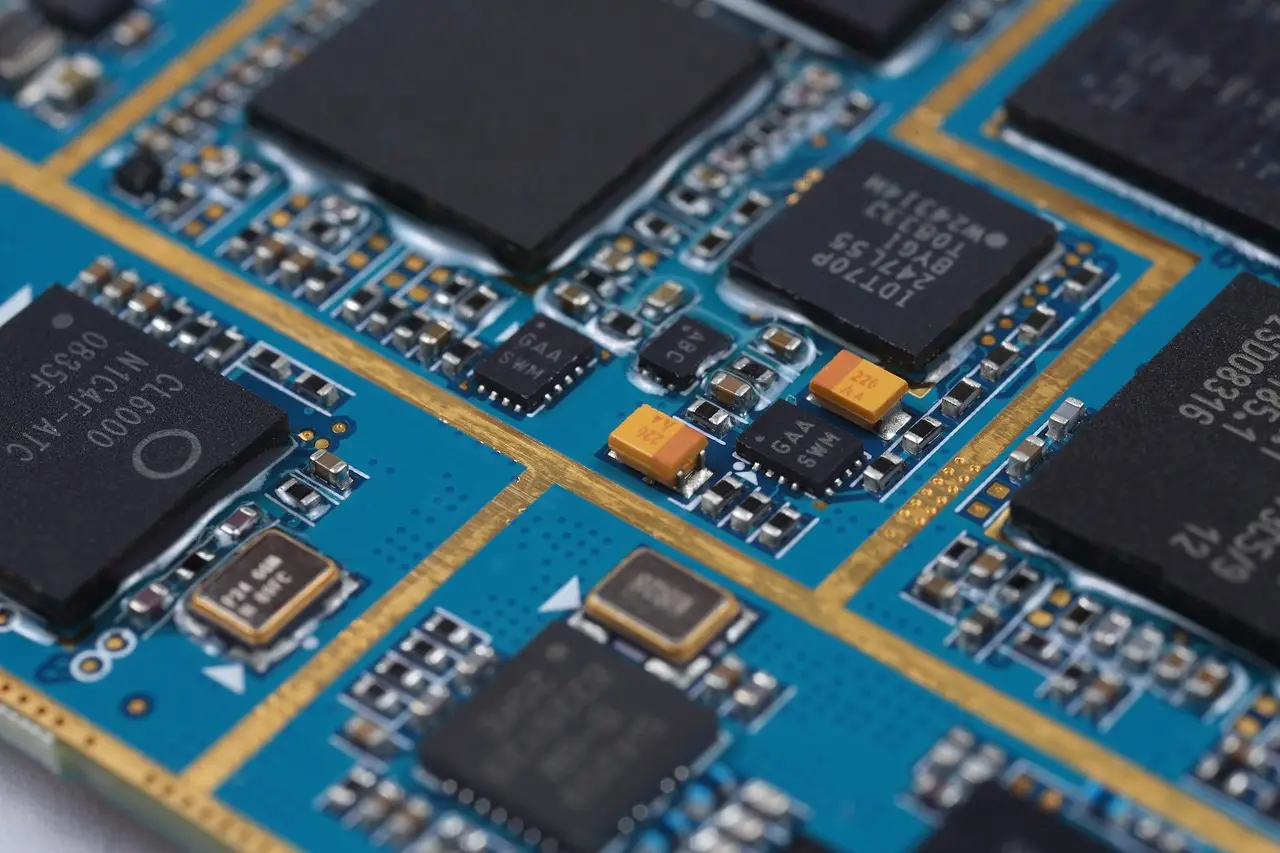
Amazon announced on November 23, 2026 that it signed an agreement to buy the proprietary technology behind Decart Optimization Stack, known as DOS. The reported price of $7.5 billion, attributed by secondary reports to Bloomberg, appears nowhere in Amazon's own announcement. Three people Amazon identifies as Decart co-founders join the company, along with Decart's AI researchers and engineers.
Amazon named Dean Leitersdorf, Moshe Shalev and Orian Leitersdorf as the co-founders coming aboard. Dean Leitersdorf serves as Decart's chief executive. The confirmed scope is technology and people, not the whole company.
What did Amazon confirm on November 23?
The record covers three items. Amazon signed an agreement to purchase the proprietary technology behind DOS. The three co-founders join Amazon. The researchers and engineers who built the stack move with them.
Amazon framed the purpose in operational terms. The technology is meant to optimize inference (the serving of a trained model to users) and custom-silicon performance, so customers can train and run AI models faster and at lower cost. Peter DeSantis, Amazon's senior vice president of foundational AI models, custom silicon and quantum computing, said: every leap forward in AI starts with getting more out of every chip.
That sentence is the strategic core. It promises efficiency, not a new model or consumer product. Efficiency is the lever cloud providers pull when compute demand outruns supply, and a software layer that raises output per chip raises the value of every chip Amazon owns or plans to build.
The confirmed scope is narrower than some headlines suggest. The announcement does not say Amazon bought all of Decart, and it does not say Decart's AI models are part of the package. Both claims remain open until Amazon or Decart states otherwise.
Why does the $7.5 billion figure stay a report?
The number travels fast because it is large and easy to repeat, and its footing is weaker than its reach. Secondary reports attribute about $7.5 billion to Bloomberg, which cited a person familiar with the matter. Reuters and Amazon's announcement do not confirm a price. GeekWire's headline carries the same hedge, calling it a reported $7.5 billion.
Reuters, citing PitchBook data, said the reported price sits well above Decart's most recent valuation of nearly $4 billion. If the figure holds, Amazon pays a steep premium over the last private mark. Premiums of that size usually reflect strategic scarcity, retention of key people, or milestone-dependent payments. No outlet has published deal terms, so the number stays a report. A headline value can bundle several moving parts, including retention packages.
The safe wording is simple. Say Bloomberg reported about $7.5 billion, say Amazon did not disclose a price, and attribute the prior valuation of nearly $4 billion to PitchBook data cited by Reuters. Each clause names its owner.
What does Decart Optimization Stack actually do?
DOS sits between an AI model and the hardware that runs it. Amazon describes it as software that helps AI systems run faster and switch among chips from Nvidia, Amazon and Google. The stack tunes a model for a given accelerator (a chip designed for AI workloads), helps move workloads between chip families, and improves hardware utilization.
The practical job is translation plus tuning. A model tested on one chip does not automatically run well on another; engineers spend weeks rewriting low-level code and adjusting memory use. A layer that automates part of that work shortens the path from trained model to cheap deployment.
Amazon named inference as a goal, and the choice makes sense. Training happens once per version; serving happens every time a user sends a prompt. A few percentage points of efficiency across a large fleet matters more than a flashy launch. No verified figure exists for how much DOS improves efficiency, so none is offered here.
Custom silicon needs software to compete. A chip that costs less but takes months to port a model onto rarely wins a procurement fight. Optimization software narrows that gap, which explains why Amazon wants it in-house.
What happens to chip portability?
Portability is the strategically interesting feature. Buyers of AI compute face supply limits, price swings and vendor dependence. A model that can move between Nvidia, Amazon and Google hardware gives its owner leverage in every contract negotiation, and the provider that owns the portability layer gains a way to steer workloads toward its own silicon.
A tension follows. A neutral tool attracts more customers than a tool that favors its owner. Amazon has not said whether DOS will keep supporting rival chips at full strength after the deal closes. The announcement describes the stack as helping systems switch among Nvidia, Amazon and Google chips, but that describes the current product, not a roadmap commitment.
How does the deal fit Amazon's chip program?
Amazon built Trainium for training and Inferentia for inference. GeekWire reported the technology is expected to support both chip families, with the transaction running through Annapurna Labs, Amazon's chip organization. Amazon also said Decart has worked with it since 2025 to deliver strong performance on Trainium. Amazon did not buy a stranger.
A prior working relationship lowers integration risk because engineers on both sides already share code paths and performance targets. It also raises a question: why a close partner needed to be owned. Partnerships can end, change terms or serve competitors. Ownership removes that uncertainty and keeps the team's next breakthrough off rival chips. TechCrunch ties the deal to Amazon preparing to sell Trainium chips, as opposed to renting them inside AWS. Amazon has not confirmed a chip-sales program, so treat that link as TechCrunch's framing.
Why do reports call it a talent grab?
Reuters described the deal as Amazon's latest AI talent grab. Amazon is not licensing the code and leaving the authors behind; it is hiring the people who wrote it. Code ages quickly, and the knowledge in people's heads ages slowly. Acquired software often decays once its authors leave, so bringing the maintainers close protects the buyer. For a tool that must track every new chip generation, maintenance is the whole game.
Reports say Decart started in 2023 in Israel, which would put founding to a reported multibillion-dollar outcome at about three years. Amazon has not said what happens to Decart's remaining activities, which is a reason to hold back on claims that the deal covers the whole company.
Who feels the market impact?
No stock-price move tied to the announcement appears in verified material. The most direct effect lands on chip vendors whose silicon DOS supports, because easier switching reduces the stickiness any one vendor enjoys. Nvidia's strength rests on software familiarity as much as hardware speed, and anything that weakens familiarity helps challengers.
Cloud rivals face a different problem. If Amazon turns DOS into a built-in AWS feature, rivals must match it, buy their own, or accept a gap, and Amazon just removed one independent team from the market. Spending data shows the stakes: Dell lifted its annual forecast as its AI backlog reached $132.3 billion, and when customers commit that much to AI hardware, a few points of efficiency become real savings. Smaller chip designers face the same software problem; coverage of Axelera's reported $400 million funding talks and Marlowe's $277 million seed round shows investors still back Nvidia alternatives.
What is confirmed, reported and open?
- Agreement announced November 23, 2026: confirmed by Amazon.
- Purchase of the technology behind DOS: confirmed.
- Three co-founders plus researchers and engineers joining: confirmed.
- Price of about $7.5 billion: reported, unconfirmed, attributed to Bloomberg via secondary reports.
- Prior Decart valuation near $4 billion: reported, PitchBook data cited by Reuters.
- Deal covers all of Decart or its AI models: unconfirmed, not stated by Amazon.
The price and the scope rows carry the most risk. Both appear in casual summaries as settled, and neither is. Writers who copy a headline figure without attribution turn a report into a fact.
What should customers watch?
Amazon has not published a delivery date, pricing model or integration plan. The announcement describes intent, so customers should wait for documentation before changing procurement plans. Teams using Decart's tooling today should ask in writing whether existing agreements continue, whether support for non-Amazon chips stays at current levels, and whether the stack remains available outside AWS.
Buyers weighing Trainium against Nvidia hardware should keep expectations grounded. Better tooling lowers switching cost, but does not erase it. Run a pilot, measure cost per request, and compare against the current setup before committing.
The strategic logic holds up without the price. Amazon chose to own the capability instead of renting it, and chose to hire the people who built it. Deal terms, a product timeline and a statement on support for rival chips will show whether this deal opens the AI chip market or tilts it toward AWS.
via shattered.io (Source)
More from Priya Raman
Show full bio
Correspondent covering money, funding and market shifts around hardware layer of artificial intelligence at Die Signal.
755 articles
Same lot
- Amazon Nears $7.5 Billion Deal for Israel's Decart
- Amazon Buys Decart's AI Chip Software in Reported $7.5B Deal
- Amazon Eyes Decart Acquisition at $7 Billion
- Amazon Reportedly in Talks to Acquire AI Chip-Portability Startup Decart for $7 Billion
- Amazon Nears $7 Billion Decart Deal as Terms Stay Unconfirmed